Do I Need Insurance to Register a Car? Registration, Tags and Title Transfers
Do I need insurance to register a car? In almost every state the answer is yes, and the order matters: insurance first, registration second. A title transfer is a different story, and some states will move ownership into your name without a policy as long as the car stays off the road. This guide explains what states ask for, how they check it, the few exceptions, and what to do when you've bought a car you can't insure yet.
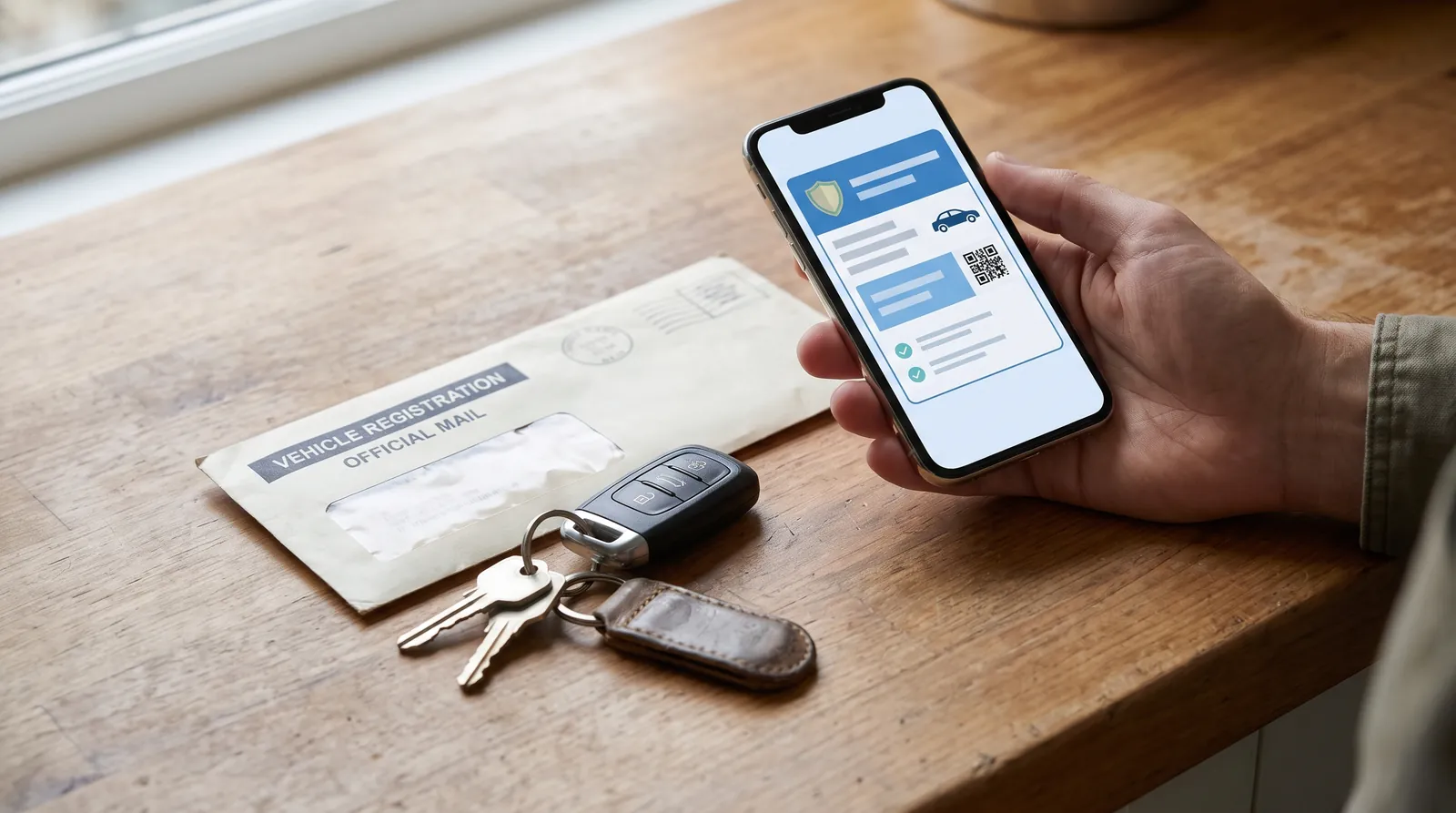
Yes. Nearly every state requires at least liability insurance before it will register a car or issue tags. A title transfer on its own often doesn't need insurance, and Texas and California both offer a title-only option, but you'll need a policy before the car can be registered and driven.
Why registration and insurance go together
Registration is the state's permission for a vehicle to use public roads. Every state except New Hampshire requires drivers to carry some form of financial responsibility, almost always liability insurance, so states tie the two together at the counter: no proof of coverage, no plates. That way the state knows every registered car has someone who can pay for the damage it causes.
The title is different. It records who owns the car, not whether it can be driven. You can own a car that sits in a garage, a project car on a trailer, or a vehicle you're about to sell, and none of those need to be insured the way a car on the road does. That split is the key to most of the questions people ask about insurance and DMV paperwork.
Do you need to have insurance to register a car?
For a car you'll drive, yes. The specifics vary:
- What counts as proof. Usually an insurance card or policy declarations page naming the vehicle by VIN. Many states accept a digital card on your phone.
- Electronic checks. A growing number of states confirm coverage directly with insurers, so the clerk may not even ask for a card. If the database doesn't show your policy yet, bring the paper anyway.
- Minimum coverage. Each state sets its own minimum liability limits, and some require extra types. Florida, for example, requires personal injury protection and property damage liability on registered cars.
- A state policy. Most states want insurance from a company licensed in that state. An out-of-state policy usually works only for a short time after you move.
So the honest answer to "do you need insurance to register a vehicle" is that you need it before you go, not after. Call your insurer with the VIN as soon as you buy the car, ask for an ID card, and take it with you.

Do I need proof of insurance to register a car, or just the policy?
You need both the policy and a way to prove it, though "proof" is getting easier. In a state with electronic verification, the policy itself is the proof once your insurer reports it. In others you'll hand over a card. Either way, the policy must cover the specific car you're registering, not just you as a driver. A policy on your old car doesn't help with the new one until you add it.
California shows how a grace period can work. When ownership changes, the DMV says the new owner must submit proof of insurance within 30 days of the date the new registration card is issued, and it suspends registrations when that proof doesn't arrive. A suspended car can't be driven or even parked on a public road until the insurance is on file.
Do you need insurance to get tags?
Tags, plates and registration go together, so yes: the same insurance rule applies when you ask for tags. Whether you're getting first plates for a new car, transferring plates to a car you just bought, or picking up a temporary tag from a dealer, expect to show coverage. Dealers check insurance before handing over the keys and temporary tags for exactly this reason. If you want to read more about the terms, our guide to what a car tag is sorts them out.
Renewing works the same way. Many states check insurance at every registration renewal, and an expired policy can block it. If you renew online and the system says it can't verify coverage, the fix is usually a call to your insurer to resend the information to the state.
Can I register a vehicle without insurance anywhere?
Rarely, and fewer places than before.
- New Hampshire is the well-known exception. It doesn't require drivers to buy liability insurance, but drivers who cause a crash or have certain violations must show proof of financial responsibility, and anyone who can't pay for damages they cause is still liable for them.
- Virginia used to let owners pay a $500 uninsured motor vehicle fee instead of buying insurance. That option ended on July 1, 2024. Every vehicle registered in Virginia must now carry at least the minimum liability coverage.
- Self-insurance and bonds. Some states let large fleets self-insure or let individuals post a bond or deposit instead of buying a policy. These are uncommon and usually need a large amount set aside.
- Non-operation status. Several states let you keep a car registered as "not in use" without insurance, as long as it isn't driven or parked on public roads. California calls this Planned Non-Operation; paying for it isn't permission to drive.
If you're hoping to register a car without insurance just to keep its paperwork current, non-operation is usually the legal way to do it.
Do you need insurance to register a car in California?
Yes, for a car that will be driven. California requires liability insurance on every registered vehicle and tracks coverage electronically through insurers' reports. On a transfer, you have 30 days from the issue date of the new registration card to get proof on file, but you shouldn't drive the car uninsured in the meantime. The grace period is for the paperwork, not the coverage.
If the car won't be driven, California offers two routes. You can apply for a title only, using a statement of facts (REG 256) and a title-only request, so the car is in your name without being registered. Or you can file Planned Non-Operation to keep the registration from lapsing while the car sits. Either way, the car can't be on public roads.
Do you need insurance to transfer a title?
This is where the answer flips. A title transfer moves ownership; it doesn't let the car on the road. Many states will transfer a title without insurance, as long as you're not registering the car at the same time.
- Texas asks for proof of insurance on Form 130-U when you apply for registration. The same form has a title-only option, used when you don't want registration; if you choose it, any plates and registration sticker previously issued for that vehicle must be surrendered.
- California offers the title-only route described above.
- Other states combine title and registration into one transaction and expect insurance for both. Ask whether a title-only transfer exists before you go.
So do I need insurance to transfer a title? Not always, but if your state processes the two together, you'll need it in practice. Our title transfer finder links to each state's forms, and the guide on where to sign a title covers the seller's side.
Gifted and inherited cars
Family transfers raise the same question. Do you have to have insurance to transfer a title when a parent gives you a car or you inherit one? The answer follows the same rule: the ownership change itself rarely needs a policy, but the moment you want plates and a registration in your name, you'll need coverage in your name too. Being listed as a driver on a parent's policy usually isn't enough once the car is titled to you, because insurers want the owner and the policyholder to line up. If you're settling an estate, the executor can often transfer or sell the car without insuring it, as long as it isn't driven in the meantime. Ask the agency which documents it wants, such as a death certificate, letters testamentary or a small-estate affidavit, before you go.
A sale between friends works the same way. Do I have to have insurance to transfer a title to a friend who's buying my car? No, the buyer is the one who needs coverage, and only once they register it. The seller's job is to sign the title correctly and, where the state allows, take the plates off.
When transferring a title without insurance makes sense
- A project or classic car you'll trailer home and restore.
- A car you inherited and plan to sell soon.
- A vehicle you're keeping in storage over winter or while abroad.
- A car that needs repairs before it can pass inspection.
In each case, transfer the title promptly. Most states set a deadline after the sale, often 30 days or less, and charge late fees. Then register and insure the car before it goes back on the road.
Buying a car: when to get insurance
Get it before you drive away. If you already insure a car, your policy may cover a newly bought vehicle for a short period, but the length and coverage vary, so call your insurer the same day. If you don't have a policy yet, buy one before you pick the car up. Have the VIN, make, model and year ready; insurers can usually issue a card within minutes. If you don't drive yourself, see registering a car without a license for how insurers handle it.

For a private sale, the seller's insurance doesn't follow the car, and in many states the seller keeps the plates. That leaves you with an uninsured, unregistered car until you sort both out. Arrange insurance first, then the title and registration. If the car is coming from another state, see our guide to buying a vehicle from out of state.
What happens if your insurance lapses after you register
States that track coverage electronically notice quickly. Depending on the state, a lapse can lead to a suspended registration, a reinstatement fee, a requirement to turn in your plates, or even a suspended license. Florida, for example, requires you to keep insurance for as long as a car is registered there and can suspend your license and registration when it isn't. If you're going to stop driving a car for a while, cancel the registration or file non-operation first, then cancel the policy, not the other way around.
Checklist before you go to register
- Buy a policy that names the car by VIN.
- Download or print the insurance ID card.
- Bring the signed-over title or your state's ownership document.
- Bring your ID, the bill of sale and payment for fees and tax.
- Get any inspection or emissions test your state requires.
Our step-by-step guide on how to register a car covers the rest, and the registration renewal finder links to each state's renewal page.
Insurance and registration FAQ
Do I need insurance to register a car?
In nearly every state, yes. Registration lets the car on public roads, and states require at least liability coverage for that. Some check insurance electronically, others ask for a card or policy. New Hampshire is the best-known exception to the general insurance mandate.
Do you need insurance to transfer a title?
Often not, if you're only transferring ownership. Several states, including Texas and California, offer a title-only application for cars that won't be driven. Insurance becomes required once you register the car, and many offices process the title and registration together.
Can I register a vehicle without insurance in Virginia?
No longer. Virginia ended its uninsured motor vehicle fee on July 1, 2024, so every registered vehicle must now carry at least the state's minimum liability insurance.
How soon do I need insurance after buying a car?
Before you drive it home. Many policies cover a newly bought car for a short time if you already insure another vehicle, but you'll need a policy that names the new car before you can register it.
Sources
- California DMV: Insurance requirements
- TxDMV: Application for Texas Title and/or Registration (Form 130-U)
- Virginia DMV: New laws take effect July 1, 2024
- New Hampshire DMV: Insurance requirements / SR-22
- FLHSMV: Insurance requirements
This guide is general information, not insurance or legal advice. Your state's motor vehicle agency and your insurer can confirm what applies to you.