Can I Register a Car Without a Title? Registering, Selling and Buying
A missing title stops more car deals than almost anything else. Can I register a car without a title? Sometimes, but rarely in the way people hope. This guide explains when a state will register a vehicle with no title, the routes that exist when one isn't available, and how to sell or buy a car when the title has gone missing without ending up with a car you can't drive.

In most states you can't register a car without a title unless it's old enough to be exempt. If the title is lost, the owner of record should order a duplicate. If you bought a car and never got one, look at your state's bonded title or court-order process, and check the VIN before you pay.
Why the title matters so much
The certificate of title is the state's proof of who owns a vehicle. Registration, the permission to drive it on public roads, is issued to the owner, so the agency first needs to know you are the owner. When you register a car you bought, the signed-over title is what shows the chain of ownership from the last registered owner to you. Without it, the agency has no way to rule out that the car is stolen, still owned by a lender, or owned by someone else entirely. So can I register a car without a title in that situation? Not until that question is answered some other way.
That's why a bill of sale alone almost never works for a car that should have a title. The bill of sale shows a deal happened; it doesn't show the seller had the right to sell. Our guide to writing a bill of sale covers what it can and can't do.
Can I register a car without a title?
It depends on why the title is missing. There are four common situations, and each has a different answer:
- The car doesn't need a title. Some states don't title older vehicles at all. You register them with other proof, usually a bill of sale and the previous registration.
- You're the owner and lost it. Order a duplicate title, then register. This is the easy case.
- You bought the car and the seller never gave you a title. Ask the seller to get a duplicate and sign it over. If you can't reach them, look at a bonded title or a court order.
- The title is held by a lender. Many states let you register a financed car while the lender holds the title, or the title is electronic. That's normal and isn't really "no title."
The rest of this guide takes each one in turn. Before anything else, find out which case you're in, because the fix for one won't help with another.
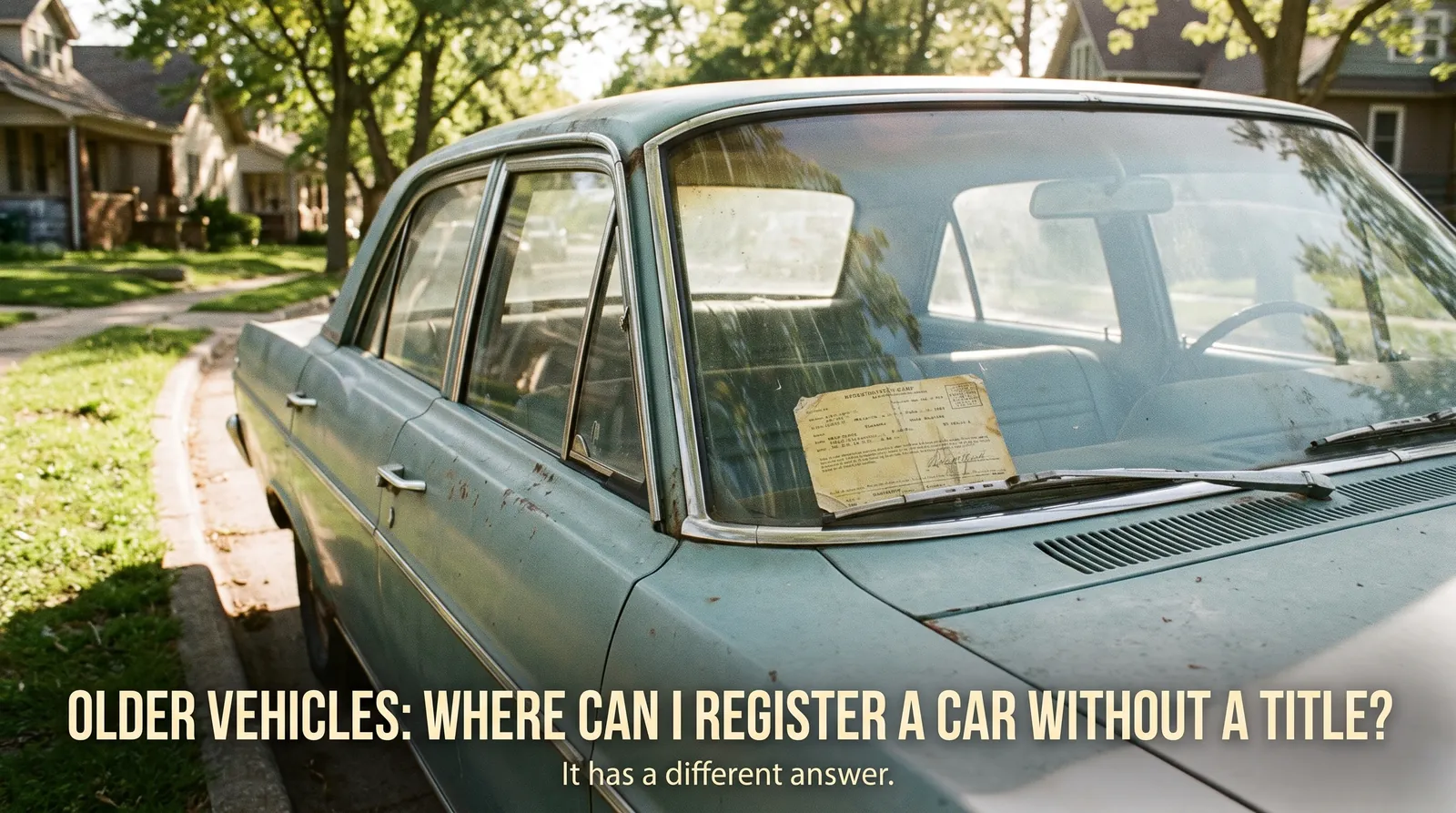
Cars that don't need a title
A few states exempt older vehicles from titling. In those states, how to register a vehicle without title paperwork is simple: you bring other proof of ownership instead. Some examples from the agencies:
| State | What's exempt | What you use instead |
|---|---|---|
| Georgia | Vehicles of model year 1985 or older | A bill of sale; an inspection form if it hasn't been registered in Georgia |
| New York | Motor vehicles of model year 1972 or older | The transferable registration, signed over with a bill of sale |
| Vermont | Older vehicles that were already exempt before the July 2024 law change | They stay exempt, but a new owner gets a title when registering |
Vermont deserves a note, because it used to be famous for this. For years, owners from other states registered old cars in Vermont with only a bill of sale and then used that registration to title the car at home. Vermont closed that route: it changed its non-resident registration rules in 2023 and its title law in July 2024. Guides online that still recommend the "Vermont loophole" are out of date.
Exemption also isn't permission to skip proof. Agencies still check the VIN, and a state that receives an untitled car from an exempt state may ask for more paperwork, such as an inspection, before it issues its own title.
If you own the car and lost the title
If the car is titled in your name, the answer is a duplicate title. Every state has a replacement application, usually with a small fee, and many let you apply online. Once you have it, you can register the car or sell it. Our guide to replacing a lost car title walks through it, and the title transfer finder links to each state's forms.
If you've just moved and your old state holds the title record, request the duplicate from that state, not the new one. The new state needs the out-of-state title to issue its own.
If you bought a car and never got the title
Can you get a title for a car without one? Often, yes, but it takes work. This is the hard case, and it's where most of the searches for how you can register a car without a title come from. Work through these steps in order.
1. Go back to the seller
If the seller is the owner of record and simply lost the title, they can apply for a duplicate and sign it over. That's the fastest fix by far. Some states also let the seller sign a form that lets the buyer apply for the duplicate, though rules vary. Get the seller's full name, address and phone number on the bill of sale so you can reach them later.
2. Check the vehicle's record
Before going further, run the VIN. Look for an open lien, a theft record, and the state where it was last titled. Our VIN decoder confirms the year, make and model, and the VIN verification guide explains the inspection many states require for cars coming from another state.
3. Look at a bonded title
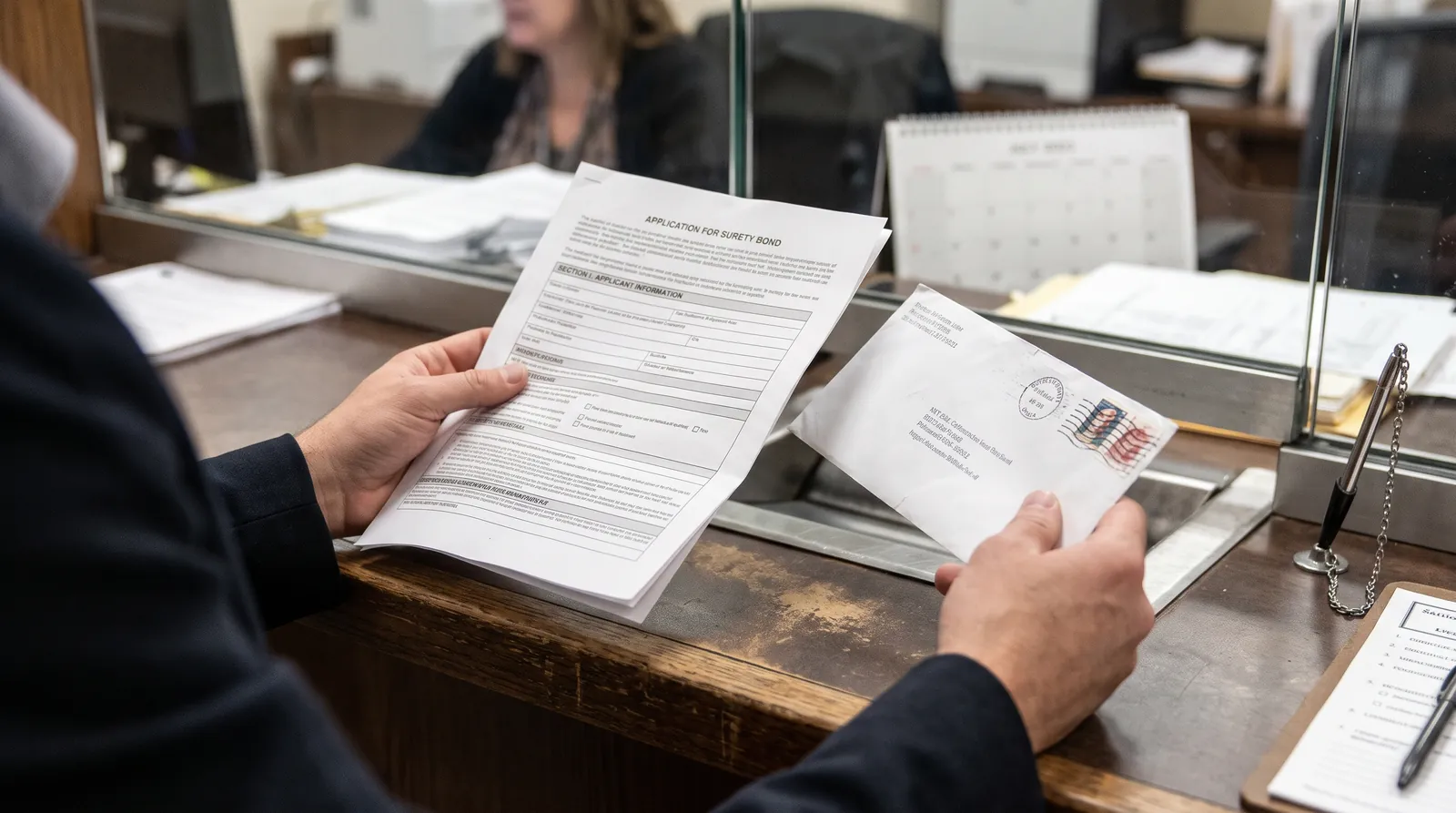
Getting a title for a car without one is exactly what bonded titles are for. Many states offer one when you have the car and some proof of purchase but no title. You buy a surety bond, a kind of insurance policy that protects any earlier owner or lender who later turns up with a better claim. After a set period without a claim, the title becomes a regular one.
Texas spells out its process clearly, and it's a good model of how these work:
- Check eligibility. You must be a Texas resident or military stationed in Texas, have the vehicle in your possession, and the vehicle must be complete: frame, body and motor. It doesn't have to run.
- Apply to TxDMV. Send the bonded title application (form VTR-130-SOF), your evidence of purchase such as a bill of sale or cancelled check, photo ID and a $15 fee to the regional service center for your county.
- Get the bond. If approved, TxDMV sends a notice with the bond amount, which is one and a half times the vehicle's value. You have one year from the notice to buy it.
- Apply for the title. Within 30 days of buying the bond, take the notice, the bond and a title application to your county tax office.
Texas won't approve a bonded title if there's a recorded lien of 10 years or less that you can't get released. Vehicles from out of state that have never been titled in Texas also need a law enforcement VIN inspection.
4. Ask about a court order
If a bonded title isn't available or doesn't fit, a court can award you ownership, and the agency will title the car on the strength of that order. It costs more time and money, so it's usually a last resort or a route for valuable vehicles. A lawyer in your state can tell you whether it's worth it.
5. Know the other special processes
Some states have separate routes for abandoned vehicles, mechanic's or storage liens, and inherited cars. If you got the car through one of those, use that process rather than a bonded title; the agency will want the paperwork that goes with it, such as lien notices or estate documents.
How to sell a car without a title
Can you sell a car without a title? The short version: you may be allowed to, but you'll hurt your price and your buyer's chances of registering it. Most buyers who know what they're doing will walk away, and the ones who don't may come back to you when the DMV turns them down. If you're asking how to sell a car without a title, the honest advice is to get the title first. Can I sell a vehicle without a title and skip all that? Only in the cases below.
- It's titled in your name: order a duplicate. It often takes a couple of weeks or less, and then you can sell normally. Our guide to where to sign a title covers the handover.
- A lender holds the title: pay off the loan, or arrange the sale through the lender so the payoff and title release happen together.
- The car is title-exempt in your state: sell it with a bill of sale and whatever your state uses instead, such as the last registration.
- You never got the title yourself: fix that before selling. Passing the problem on to a buyer is how disputes and fraud claims start.
The one common exception is selling to a scrapyard or salvage buyer. Many states have a process for junking a car without a title, and licensed salvage dealers often handle the paperwork. Even then, expect to show ID and proof that the car is yours, and expect a lower price.
So how do I sell a car without a title when a duplicate truly isn't possible, for example because the car was never titled to me? Start the bonded or court-ordered title process yourself, then sell once it's done. A buyer will pay noticeably more for a car with clean paperwork, which often covers the cost of the bond.
Selling a car with no title: protect yourself
If you do go ahead with a sale car without title, put everything in writing. Write a bill of sale that names both parties, the VIN, the price and the date, and states plainly that the title isn't included and why. Keep a copy, remove your plates where your state requires it, and file a release of liability or notice of sale if your state has one. Selling car with no title paperwork is still selling, and you want proof of when the car stopped being your responsibility.
How to buy a vehicle without title paperwork safely
Cars with no title are cheaper for a reason. Sometimes the reason is innocent, a lost title or a long-dead relative, and sometimes the car is stolen or still owned by a bank. If you want to buy one anyway, these checks make it much safer:
- Match the VIN. Check it on the dash, the door jamb and any paperwork the seller has. Our guide on where to find the VIN shows the usual spots.
- Check for theft and liens with a VIN history service and, if you can, the state's title record.
- See the seller's ID and compare the name with the last registration.
- Call the agency first. Ask which route you'd use to title the car and what it needs from the seller. Do this before you hand over money, not after.
- Pay in a traceable way and get a detailed bill of sale.
A seller who could order a duplicate title but refuses, or who wants cash and no paperwork, is giving you all the information you need. Walk away.
How do I register a car with no title once I have the paperwork?
Once you hold a duplicate, a bonded title, a court order or the paperwork your state accepts for exempt cars, registration works like any other. You'll typically need the ownership document, proof of insurance, ID, the registration fee and sales tax, and in some states an inspection or emissions test. Our guide on how to register a car covers the full list, and if the car came from another state, see buying a vehicle from out of state.
Expect to pay the title and registration fees in full even if you already paid something for a bond. And remember that many states give you only a short window after a purchase to transfer the title, often 30 days or less, with late fees after that, so start the process as soon as you know there's a problem.
Mistakes that make it worse
- Registering in another state with a "loophole." These rarely work anymore, and they can leave you with a registration your home state won't accept.
- Buying a "replacement title" online. Only the state issues titles. Anything else is fake.
- Waiting. The longer you wait, the harder it is to reach the seller and the bigger the late fees.
- Driving it unregistered. Without registration and insurance, a stop can end with the car towed.
Car without a title FAQ
Can I register a car without a title?
Usually not, unless the car is old enough to be title-exempt in your state or you get a replacement ownership document first. If the title is lost, the owner of record can request a duplicate; if you bought a car with no title, many states offer a bonded title or a court-ordered title.
Can you sell a car without a title?
Legally, the owner can sell it, but the buyer will struggle to register it. The cleanest path is for the seller to get a duplicate title before the sale. Exceptions are cars that don't need a title in their state, such as Georgia vehicles of model year 1985 or older, which transfer with a bill of sale.
What is a bonded title?
A title issued after you buy a surety bond that protects anyone with a better ownership claim. In Texas the bond equals one and a half times the vehicle's value, and you apply through TxDMV and then your county tax office.
Should I buy a car with no title?
Only with care. Check the VIN for theft and liens, get a detailed bill of sale with the seller's ID, and confirm with your state which route you'll use to title it. A seller who can request a duplicate title but won't is a warning sign.
Sources
- TxDMV: Bought a vehicle without a title?
- Georgia DOR: Title and register a vehicle purchased in a casual sale
- New York DMV: Proof of ownership is not available
- Vermont Statutes: 23 V.S.A. § 2013
This guide is general information, not legal advice. Your state's motor vehicle agency decides what it accepts as proof of ownership.