How to Replace a Lost Car Title
Every state will replace a title that's lost, stolen or damaged, and in most of them it takes one form, a small fee and a couple of weeks. This guide explains how to replace a lost car title anywhere in the US, then gives the form, fee and quickest route for 24 states, all checked against the agencies' own pages.

Apply to the state that issued the title, not the state you live in now. Use its duplicate or replacement title form, show ID, clear any old lien, and pay the fee. The new title arrives by mail, and the old one stops being valid.
What should I do if I lost my car title?
Before you fill in anything, spend ten minutes ruling out the usual hiding places. Titles end up in the folder from the dealership, in a fireproof box, inside the owner's manual, or with the paperwork from the day the loan closed. It's also worth asking a simple question: did you ever have it at all?
- If you financed the car, the lender may hold the title, or the state may keep it electronically until the loan is paid. Wisconsin, for example, has sent titles with a lien to the lender since 2012, and Arizona keeps most titles electronically unless you ask for paper.
- If you paid the loan off recently, the release may still be in the mail, or the state may be waiting for the lender to release the lien in its system.
- If the title was stolen, treat it like stolen ID. A thief with a signed or blank title can try to sell the car, so replace it promptly; the new title voids the old one.
When the title is missing for good, replacing a lost vehicle title works almost the same way everywhere. What changes from state to state is the form name, the fee and whether you can do it online.
How to replace a lost car title, step by step
- Find out which state issued the title. A duplicate always comes from the state that titled the car last, which is the first thing to settle when you work out how to replace a lost car title. If you've moved since, you still apply to the old state, then title the car in your new one.
- Check for a lien. If a loan is still recorded, many states send the replacement to the lender. If the loan is paid, get a lien release from the lender first so the new title is issued in your name alone.
- Gather what the state asks for. Usually that's your driver's license or ID, the VIN, the plate number and sometimes the old title number, which our guide to finding your title number helps with. Our VIN location guide shows where to read the VIN on the car itself.
- Apply online, by mail or in person. Use the state's duplicate title application. Online is fastest where it's offered; a counter visit helps when something on the record has to change.
- Pay the fee and wait for the mail. Most states print titles centrally and mail them. Once the replacement is issued, the original is void, even if it turns up in a drawer next week.
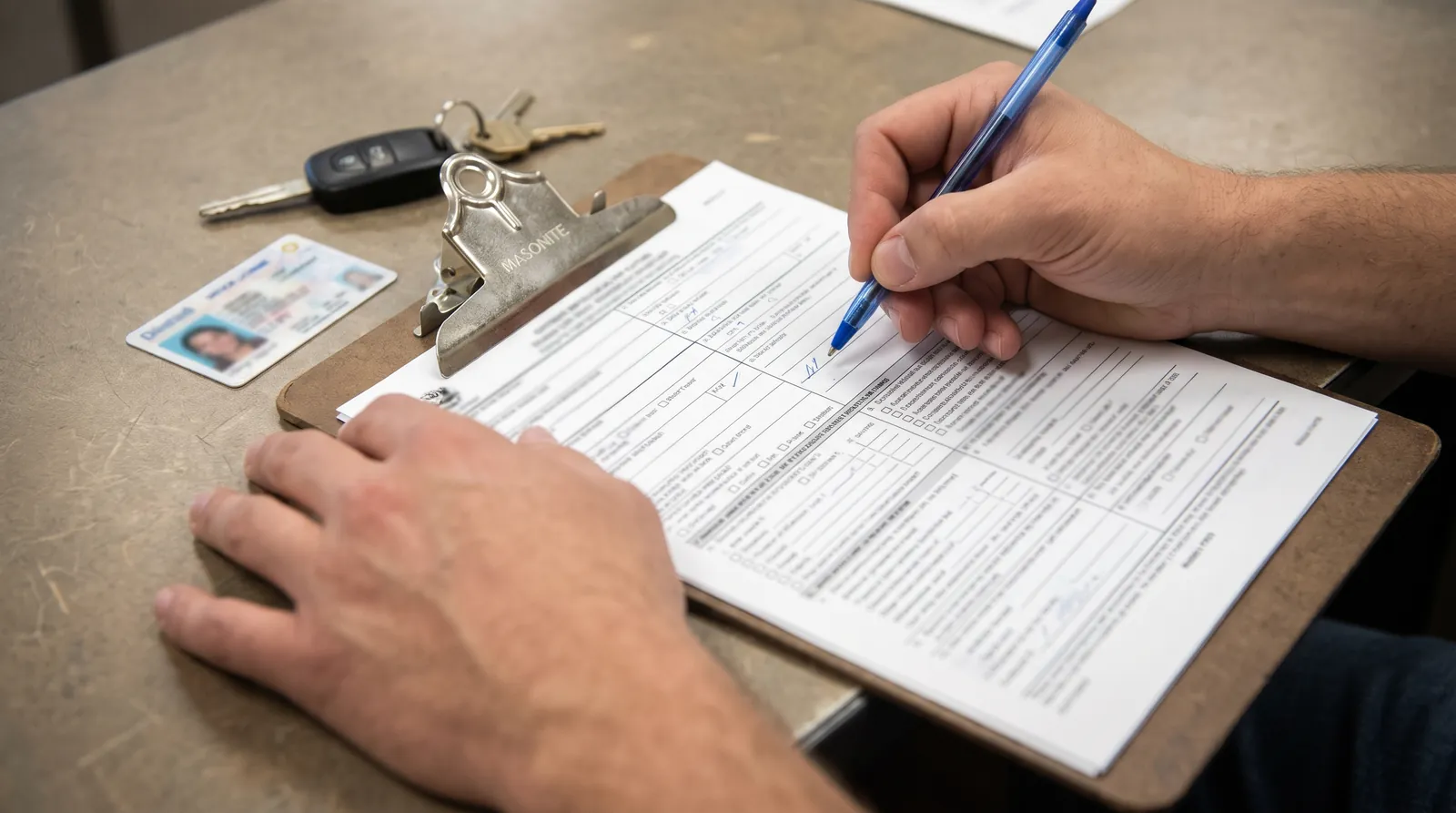
Replacement title forms and fees by state
These are the forms and fees we've confirmed on each agency's site. Where we have a full guide for the state, the state name links to it. Fees change, so check the agency's page before you send money.
| State | Form or route | Fee | Online? |
|---|---|---|---|
| Arizona | AZ MVD Now, or form 96-0236 | $4 | Yes |
| Arkansas | MyDMV, a revenue office, or mail | $10 (+$10 expedited) | Yes |
| California | REG 227 | See DMV fee schedule | For eligible owners |
| Colorado | DR 2539A at the county office | $8.20 | Check |
| Connecticut | H-6B | $25 | No |
| Georgia | MyMVD, or MV-1 at the County Tag Office | $8 | If eligible |
| Illinois | Secretary of State application | $50 | Check |
| Indiana | myBMV, kiosk, branch, or State Form 205 by mail | $15 by mail (+$25 speed title) | Yes |
| Louisiana | DPSMV 1799 with a signed affidavit | Confirm with OMV | No |
| Maryland | myMVA, an MVA kiosk, or VR-018 | $40 | Yes |
| Massachusetts | RMV Application for Duplicate Title | $25 | No |
| Michigan | Secretary of State office or mail | $15 ($20 same-day) | Check |
| New Jersey | OS/SS-UTA at a motor vehicle agency | $60 | No |
| New Mexico | MVD-10901, or online through MVD | $5 | Yes |
| New York | Online, an office, or MV-902 by mail | $20 | Yes |
| North Carolina | MVR-4, notarized | $25.50 | Check |
| Pennsylvania | MV-38O by mail | $72 | No |
| South Carolina | EZ Online Duplicate Title, a branch, or certified mail | $15 ($35 expedited in person) | Yes |
| Tennessee | County clerk, in person or by mail | $14 plus county fees | No |
| Texas | VTR-34 | $2 by mail, $5.45 in person | No |
| Utah | Motor Vehicle Portal, or TC-123 | $6 | Yes |
| Virginia | VSA 67 | $15 | Check |
| Washington | Affidavit of Loss | $39.50 | Check |
| Wisconsin | MV2119 | $20 (+$5 at a counter) | No |
"Check" means the agency's page didn't confirm an online option either way. For any state not listed, search the agency's site for "duplicate title" or "replacement title"; the form is usually on the same page. Our title transfer checklist links to every state's official title page.
Notes on eight states without their own guide yet
Utah duplicate title application
Utah's Division of Motor Vehicles charges $6. Request it through the Motor Vehicle Portal, or mail form TC-123 with the fee to the Motor Vehicle Division contact center in Salt Lake City; don't send cash. On the form you certify that the original is lost, stolen, mutilated or illegible and hasn't been signed over to anyone. Utah has one useful twist: if you're selling to a Utah resident, the completed TC-123 can stand in for the title, as long as you've signed both parts of it.
MA duplicate title
For an MA duplicate title, the RMV's Title Division charges $25, paid by check or money order to MassDOT. The MA duplicate title form is the Application for Duplicate Title: mark the reason as lost and mail it to the address printed on the form. The title is sent to the address on the RMV's record. If the original turns up later, the RMV expects you to surrender it.
Replacement title in TN
If your vehicle title is lost in Tennessee, apply through your county clerk, in person or by mail, using the Multi-purpose, Noting of Lien and Duplicate Title Application. The state lists the fee as $14, and the county may add its own fee. If a lien is still recorded with the Vehicle Services Division, the duplicate can only go to the lienholder; once it's paid, the owner can apply. Out-of-state owners use the clerk in the county of their last Tennessee address. The state's duplicate title page doesn't offer a Tennessee duplicate title online; it's in person or by mail.
Duplicate title in CT
For a lost title, CT DMV uses form H-6B, the Application for Replacement Certificate of Title, and charges $25. If a lien is listed, include the lender's release letter. Selling before the replacement arrives is possible when the buyer will register the car in Connecticut: the H-6B goes with a Supplemental Assignment of Ownership (form Q-1), and the duplicate fee is paid when the buyer registers.
Duplicate NY title
A duplicate NY title costs $20. If your address hasn't changed, apply online or at any DMV office; by mail, send form MV-902 with copies of your proofs of identity. Offices don't print titles on the spot. DMV processes the request within about 72 hours and mails the title from Albany, and from that point the old title can't be used.
Duplicate title in VA
Virginia DMV charges $15 for a replacement title with no changes, and its current page asks for form VSA 67 and the fee when a title is lost or stolen. If your car's lien was released electronically and you never had a paper title, DMV may print a first paper title at no charge.
Lost title in NM
New Mexico's duplicate title is $5, on form MVD-10901 or through the Motor Vehicle Division's online services. Bring your driver's license as ID, or send a copy by mail. If the old title shows a lien, include a release of lien, or the duplicate goes to the lender. Titles are mailed from MVD's central office.
Maryland vehicle title replacement
Maryland's MVA raised its duplicate title fee from $20 to $40 in 2025. Order it through myMVA or at an MVA kiosk if your vehicle is eligible; otherwise use form VR-018 with a copy of your ID. If the lien was released electronically, the MVA may issue a clear duplicate at no extra cost.
Online, mail or in person: which route to pick
Whichever state you're in, the fastest way to replace a lost car title depends on your record. Online is the fastest route when nothing on the record has changed: same owner, same name, same address and no lien. Most online systems check those details automatically and refuse the request if any of them differ.
Mail suits owners who've moved out of state or can't reach an office, but it's the slowest. New Jersey warns that mailed requests can take 8 to 12 weeks, and Arkansas asks you to allow at least three.
An office visit is the right choice when something needs fixing first: a lien that still shows, a name change, a missing address on file, or a co-owner who has died. The clerk can tell you exactly what's missing before you pay. A few states also offer a faster title for an extra fee at the counter, such as South Carolina's expedited title and Michigan's same-day title.
If there's a loan, or a loan you paid off
A recorded lien is the most common reason a replacement title goes somewhere unexpected. In Indiana, Tennessee, New Mexico and many other states, a duplicate for a car with a lien on record is sent to the lender. Louisiana goes further and has the lienholder sign an affidavit of its own.
If you paid the loan off years ago, the lien may still be on the record because the release was never filed. Ask the lender for a lien release letter and send it with your application. In Maryland and Virginia, a lien released electronically can also mean a free or cheaper clear title, so ask about it before you pay the full fee.
If your title never arrived
A title lost in the mail is often replaced for free if you act quickly. Pennsylvania waives the fee within 90 days of the issue date, and Georgia and Louisiana within 60. After that window, a title that never arrived is treated like any other lost title. If you bought from a dealer, ask the dealership first: dealers usually apply for the title on your behalf and can tell you when it was sent. For normal waiting times by state, see how long it takes to get a car title.
Selling a car while the title is missing
A buyer can't register a car without a title signed over to them, so in most states you replace the lost car title first and sell second. The exceptions are narrow and usually only work with an in-state buyer, such as Utah's TC-123 and Connecticut's H-6B with a Q-1, both described above. For buyers stuck with a car and no title, see our guide on registering a car without a title.
Once the new title arrives, see where to sign a title when selling a car. If you've already agreed a sale, tell the buyer the title is on its way, put the agreed price and date in a bill of sale, and sign the new title over as soon as it arrives. Don't hand over a car with only a bill of sale and a promise; in most states the buyer would have no way to register it.
If you've moved to another state
Apply to the state where the title was issued. Most accept mailed applications from former residents, and several say so explicitly: Arkansas and Tennessee both describe how out-of-state owners apply. Once the duplicate arrives, title the car in your new state, which may also want a VIN inspection for a car coming from elsewhere.
If the owner has died
A replacement for a deceased owner's car needs proof of who can act for the estate. Massachusetts, for example, asks for letters of administration, a court order or an affidavit of surviving spouse along with the death certificate. Start at an office rather than online, since online systems expect the owner on record to apply.
How to get a copy of a car title
People often search for a copy of their title when what they need is a duplicate. A photocopy or a photo of your title isn't valid for selling or registering a car. What you can get is either a duplicate, which replaces the original and voids it, or a certified copy of the title record, which some states sell for court cases or history checks but which can't be used to transfer ownership. Texas is an exception in name only: its "certified copy of title" on form VTR-34 is the replacement title itself.
Avoid paying a middleman
Search for how to replace a lost car title and the results are full of services offering to do it for you, often for several times the state's fee. Some are legitimate tag agencies, which several states license, but you can almost always do it yourself on the agency's own site. Replacing a lost car title yourself is rarely harder than ordering through them. If a site asks for your Social Security number, charges a "processing fee" before showing you the state's form, or promises a title without ID, close it. The official agency pages linked below are where every duplicate actually comes from.
Lost car title FAQ
Can I replace a lost car title online?
In many states, yes. Arizona, Georgia, Indiana, Maryland, New Mexico, New York, South Carolina, Utah and Wisconsin are among the states with an online option, usually limited to owners whose name, address and lien details haven't changed. Pennsylvania and Connecticut owners apply on paper.
How much does a replacement car title cost?
It depends on the state. Among the states we've checked, fees run from $4 in Arizona and $5 in New Mexico to $60 in New Jersey and $72 in Pennsylvania. Most fall between $8 and $25.
Can I sell my car without the title?
Usually not, because the buyer needs a signed title to register the car. A few states let a seller use the duplicate title application in its place for an in-state buyer, such as Utah's TC-123 or Connecticut's H-6B with a Q-1. Otherwise, replace the title first.
What happens to the old title when a duplicate is issued?
It becomes void. New York, Indiana and other states say the original and any earlier duplicates can no longer be used to transfer the vehicle once the replacement is processed.
Who can apply for a replacement title?
The owner on record, a lienholder, or someone with the owner's power of attorney. A buyer can't apply for a duplicate of the seller's title.
Sources
- Utah DMV: Replace a title
- Massachusetts RMV: Application for Duplicate Title
- Tennessee Department of Revenue: Duplicate title
- Connecticut DMV: Replace your title
- New York DMV: Replace a title certificate
- Virginia DMV: Replacement and substitute titles
- New Mexico MVD: Form MVD-10901
- Maryland MVA: Request a duplicate title
- For the other 16 states, the sources are listed on each state guide linked in the table.
This guide is general information, not legal advice. Each state's motor vehicle agency has the final word on its own process and fees.