Where to Sign a Title When Selling a Car
Most titles have more signature lines than people expect, and a signature in the wrong box can send the buyer back to the DMV. Here's where to sign a title when selling a car, line by line: what the seller signs, what the buyer signs, and when a notary or a lender has to sign too.
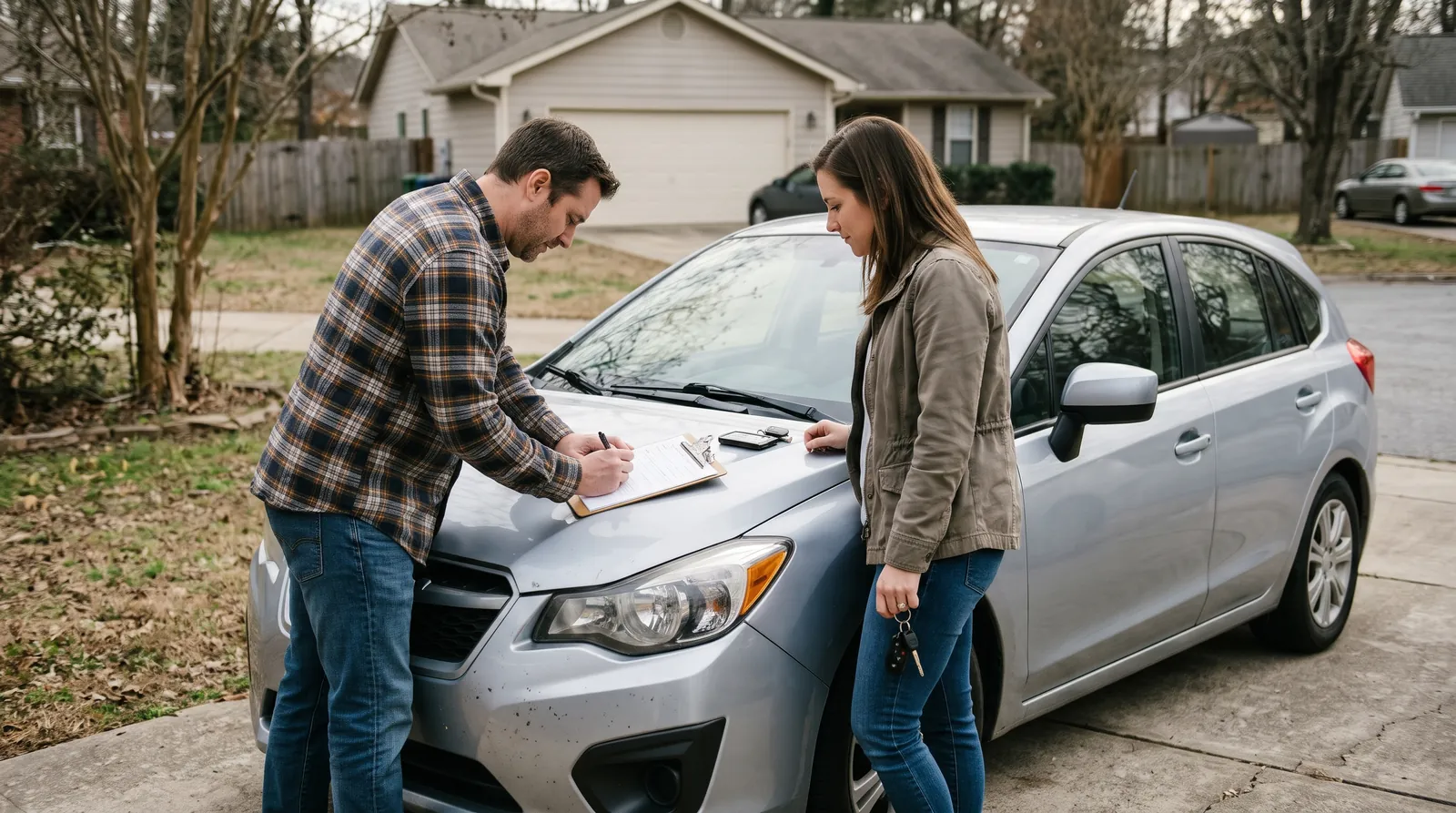
The seller signs and prints their name on the back of the title, in the section for releasing ownership. The buyer signs in the purchaser section. If the car is under 20 model years old, both also sign the odometer statement. Sign in ink, in front of a notary if your state requires one, and never before the sale.
Where does the seller sign a car title?
Turn the title over. Nearly every state puts the transfer on the back, in a block with a name like "assignment of title by owner," "transfer by seller" or "release of ownership." That block is where the seller signs. Look for these pieces inside it:
- Seller's signature: signed exactly as the owner's name appears on the front. If the front says Robert J. Miller, sign as Robert J. Miller, not Bob Miller.
- Seller's printed name: most titles want it printed beside or under the signature.
- Buyer's name and address: the seller often writes these in, so the title is assigned to a named person. Leaving them blank is how titles get passed along illegally.
- Sale date and price: many titles have a space for both. Write the real price; several states use it to work out the buyer's tax.
If you're asking "when selling a car, where do I sign the title?" and see two blocks that look similar, read the small print above each. One is for the seller of this sale; a second or third block on many titles is for a dealer reassigning the car later. Private sellers only use the first.
Where does the buyer sign on a car title?
In most states the buyer signs too, in a purchaser or buyer section next to or below the seller's. The buyer prints their name, signs, and in some states adds their address. If your title has no buyer's line, the buyer's signature goes on the state's title application instead, so the buyer should read both documents before the meeting.
Wondering where you sign a title when buying a car? Look for the purchaser block, usually right below the seller's. Buying, not selling? Check the seller's signature against their ID and the name on the front before you hand over money. A mismatch is far easier to fix in the driveway than at the counter.
How to sign a title over for a car, step by step
Here's the whole handover in the order it usually happens. It works the same way whether you're selling to a stranger or wondering how to sign a car title over to a friend.
- Agree the price and check the buyer's ID. You'll write their full legal name on the title, so copy it from the license rather than from a text message.
- Read the back of the title before you pick up a pen. Find the seller's block, the buyer's block and the odometer section, and note whether a notary block is printed there.
- Fill in the buyer's details, the date and the price. Use blue or black ink and write slowly. Most titles leave little room, and a cramped correction is still a correction.
- Write the odometer reading and tick the right box. Read it off the dashboard together so there's no argument later.
- Sign and print your name as it appears on the front. If a notary is required, do this step in front of them, not at home.
- Have the buyer sign their section and check every line once more before the title changes hands.
- Hand over the title with any lien release, and keep a photo of both sides for your records.
That's how you sign a title over to someone in practically every state. What differs is the wording of each block and whether a notary or a separate form is involved, which the next sections cover.
Every signature a title can have
| Section | Who signs | When it applies |
|---|---|---|
| Seller or owner assignment | Each owner who has to release the car | Every sale or gift |
| Buyer or purchaser | The new owner | Most states |
| Odometer disclosure | Seller and buyer | Vehicles of the 2011 model year or newer, for 20 years |
| Lienholder release | The lender | Only if a loan is still recorded on the title |
| Notary block | A notary, after watching the seller sign | Notary states only |
| Dealer reassignment | A licensed dealer | When a dealer resells the car |

Two owners: AND or OR
When two people are on the title, the word between their names decides who has to sign. Names joined by AND generally both have to sign as sellers. Names joined by OR usually let either owner sign alone. California's title shows the same idea with its own lines: the owner signs Line 1, a co-owner signs Line 1b, and a lienholder signs Line 2. If you only want to take one owner off, see how to remove a name from a car title.
If one of two owners has died, the surviving owner usually needs the death certificate, and sometimes more, depending on how the title was worded. That's one of the few cases where it's worth calling the agency before you sign anything.
Does a car title need to be notarized?
In most states it doesn't. In the ones that require it, the notary isn't optional, and an unnotarized title comes straight back. Based on the agencies' own pages:
- Kentucky: the seller signs in front of a notary.
- Louisiana: the title is assigned before a notary, or a notarized bill of sale goes with it.
- North Carolina: the seller's signature on the title must be notarized.
- Ohio: the seller's signature is notarized.
- Oklahoma: a paper title must be assigned and notarized.
- Pennsylvania: the seller's signature is notarized or verified, usually at an authorized PennDOT agent.
Montana used to be on this list, but its Motor Vehicle Division says the requirement ended for individuals on October 2, 2025.
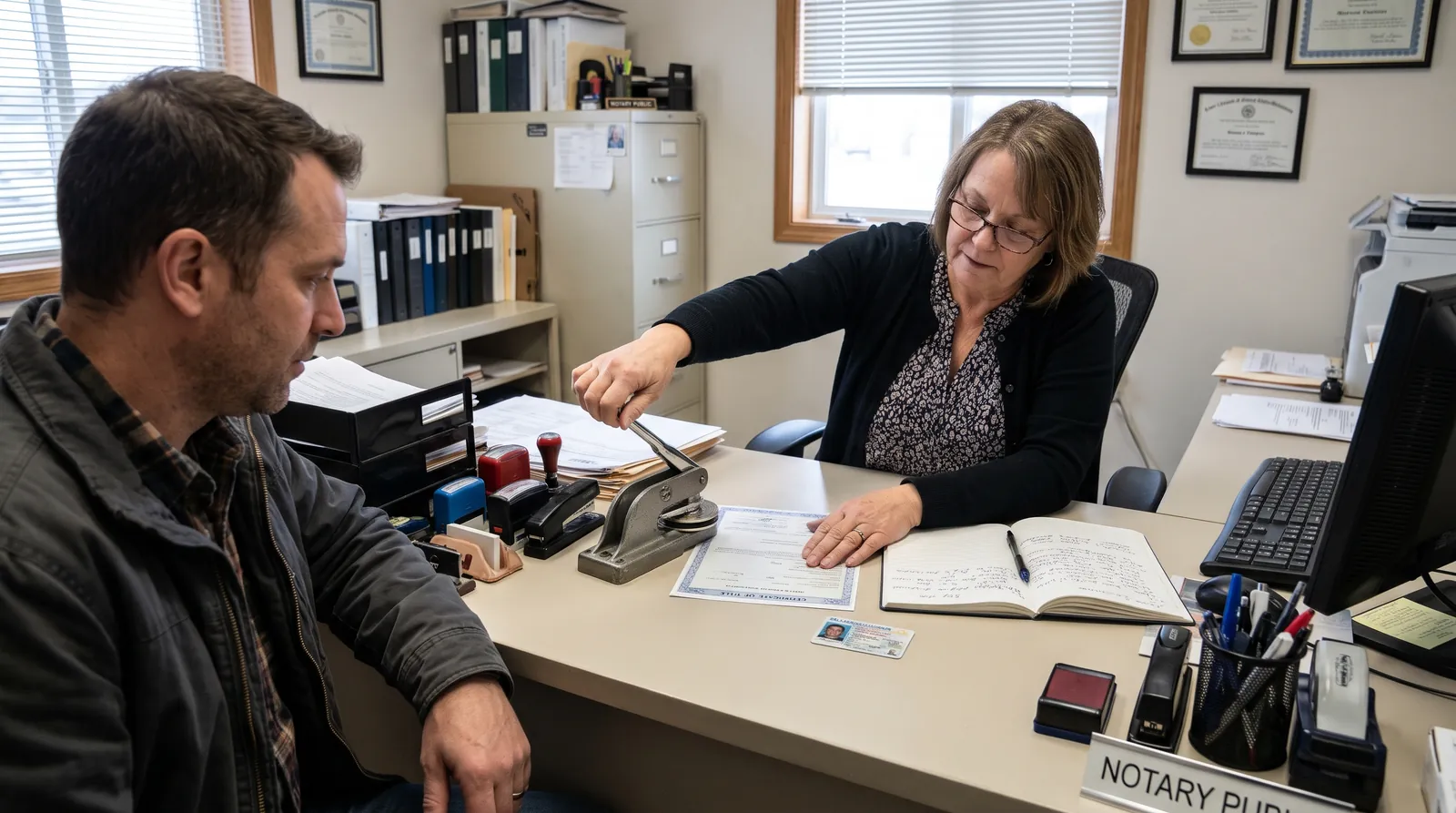
Where can you get a car title notarized? Many banks and credit unions notarize for their customers, and shipping stores, tag agencies and some motor vehicle offices offer notary services too. Call ahead, bring photo ID, and don't sign until the notary is watching.
The odometer section
Federal law requires an odometer disclosure when ownership of most vehicles changes. Since January 1, 2021, the exemption begins only once a vehicle of the 2011 model year or newer is 20 years old; anything from the 2010 model year or earlier is already exempt. Vehicles over 16,000 pounds and trailers are exempt too. So for most cars sold today, the seller writes the mileage, ticks whether it's the actual mileage, and both seller and buyer sign that section.
Write the number as it shows on the odometer, without tenths, and don't round. A wrong reading usually needs a correction form from the agency rather than a line through it.
Where to sign a pink slip in California
California still calls its title the pink slip, and if you're wondering where you sign a pink slip when selling a car, the lines are numbered. The registered owner signs Line 1 to release ownership, a second owner signs Line 1b, and a lender that's being paid off signs Line 2. Where to sign on a pink slip when selling is the same on older pink titles and the newer blue-bordered ones; only the layout around the lines changed. After the sale, the seller files a release of liability with the DMV within 5 days. Our California title transfer guide covers the rest of that sale, and our field-by-field guide on how to fill out a title when selling a car covers the other blanks.
If there's still a loan on the car
If a lender is listed and the loan isn't paid, the seller can't release the car alone. The usual route is to pay the loan off with the sale money, often by meeting at the lender, and have the lender sign the release or send a lien release letter. A buyer should never accept a title that still shows a lender unless a signed release comes with it.
Mistakes that can void a title
- Crossing out or using correction fluid. Most states treat alterations as a reason to reject the title. If you make an error, stop and ask the agency how to correct it; some use a separate statement of error.
- Signing in the buyer's section. A seller's signature in the wrong block is the most common reason a title comes back.
- Signing before the sale. A title signed and left blank on the buyer's side can be sold by anyone who holds it. In Georgia, handing over a title assigned in blank is even a misdemeanor.
- Using a nickname or leaving off a middle initial. Match the front of the title.
- Forgetting a co-owner. If two names are joined by AND, one signature isn't enough.
If the title is lost or ruined before the sale, replace it first; our guide to how to replace a lost car title lists the forms and fees by state.
How to sign a title over to someone in your family
Giving a car to a child, spouse or parent uses exactly the same lines as a sale. The giver signs as seller, the relative signs as buyer, and the price is written as "gift" where the title or the tax form asks for it. Many states charge less tax, or none, on family transfers, but usually only with a signed statement or affidavit. Our title transfer checklist adds a reminder for those forms when you choose "gift or family transfer."
Do I sign my car title when I receive it?
No. When a new title arrives in the mail, check that the names, VIN and lienholder are right, then put it somewhere safe and leave the seller's section blank. Sign it only on the day you transfer the car, in front of the buyer or the notary. A title you've already signed is, in practice, a car anyone can sell.
After you've signed: the seller's next steps
- Take a photo of both sides of the signed title before you hand it over. It's your proof of the date and the mileage.
- Give the buyer a bill of sale. It records the price, date and as-is terms in one place; our free vehicle bill of sale template fills in the state's requirements.
- Report the sale. Most states have a release of liability or notice of sale. California gives you 5 days; Wisconsin asks sellers to report within 30.
- Deal with the plates. In many states they stay with the seller; in others they go with the car.
Signing a title: FAQ
Where does the seller sign a car title?
On the back of the title, in the section for the seller or owner releasing ownership, often labeled assignment of title. The seller signs exactly as the name is printed on the front and usually prints it beside the signature.
Does the buyer sign the title too?
In most states, yes. The buyer signs and prints their name in the purchaser or buyer section, and both sides sign the odometer statement when one is required.
Do both owners have to sign a car title?
If the names are joined by AND, generally both must sign. If they're joined by OR, either owner can usually sign alone. Check your state's rule if the title shows a slash or no word at all.
Does a car title need to be notarized?
Only in some states. Kentucky, Louisiana, North Carolina, Ohio, Oklahoma and Pennsylvania require the seller's signature to be notarized or verified; Montana dropped its requirement for individuals in October 2025.
Should I sign my title as soon as I receive it?
No. Don't sign the seller's section until you are actually transferring the car, in front of the buyer or the notary. A title signed in advance can be used by anyone who holds it.
Sources
- NHTSA: Changes to odometer disclosure requirements
- eCFR: 49 CFR Part 580, Odometer disclosure requirements
- California DMV: Title transfers and changes
- Montana Motor Vehicle Division
- State notary rules: see the sources on our title transfer checklist.
This guide is general information, not legal advice. Your state's title and its motor vehicle agency have the final word on where each signature goes.