How to Fill Out a Title When Selling a Car, Field by Field
A title has only a handful of blanks, but a wrong entry in any of them can send the buyer back to the DMV and leave you on the hook for a car you no longer own. This guide shows how to fill out a title when selling a car, one field at a time: what to write, what to leave blank, and how the buyer finishes the job. It also covers California's pink slip and what to do if you make a mistake.
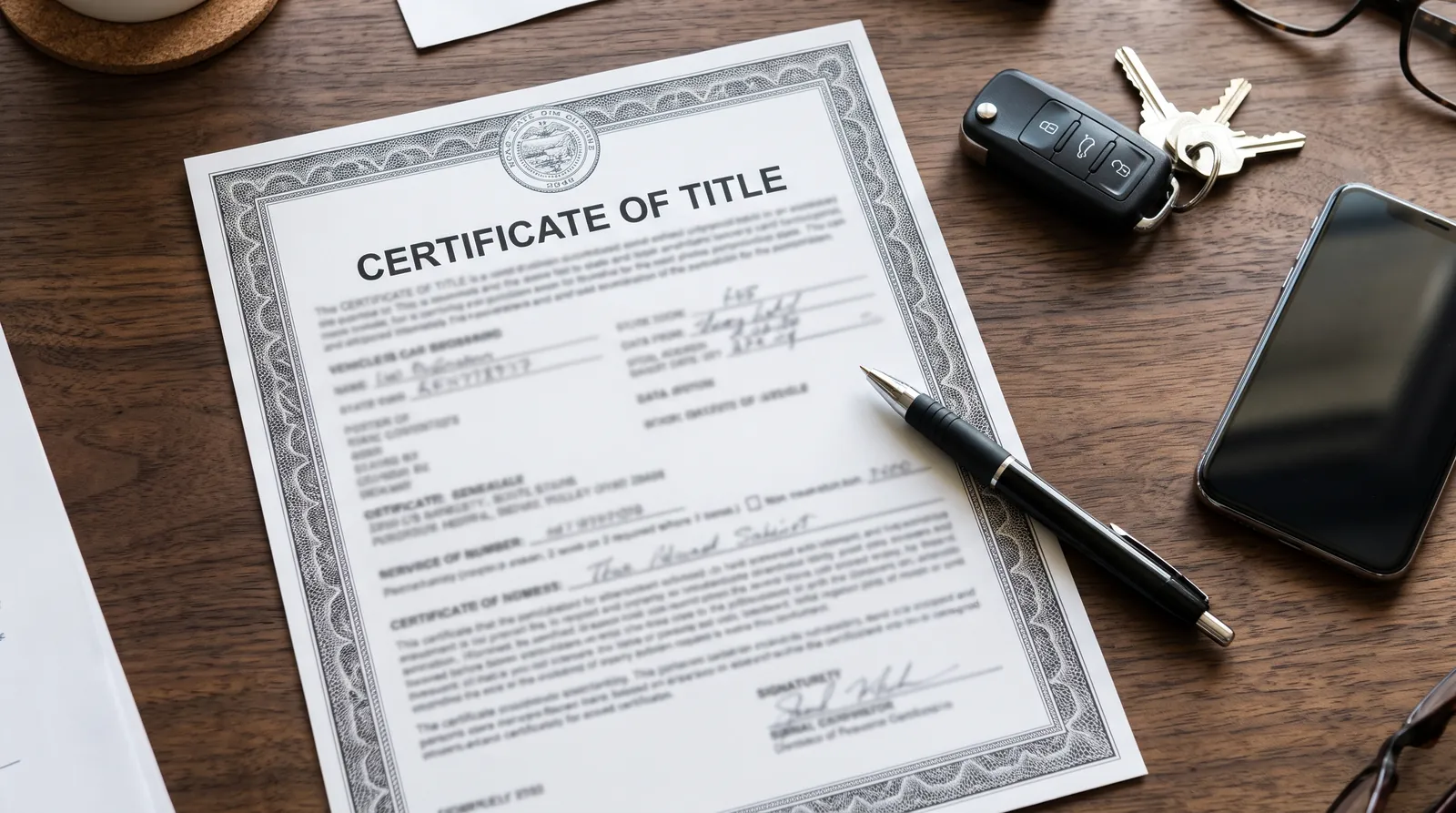
Use the assignment or transfer section on the back or bottom of the title. Fill in the buyer's name and address, the date, the price if asked, and the odometer reading. Every owner listed signs and prints their name, the buyer signs, and a lender signs off if there's a lien. Use black or blue ink and don't cross anything out.
Before you pick up a pen
Most title mistakes happen because the seller starts writing before the deal is settled. Do these first:
- Agree on the price and date. They go on the title, and changing them later isn't easy.
- Get the buyer's exact legal name as it appears on their ID, and their address.
- Check the lien section. If a lender is shown, you'll need its signature or a release letter.
- Read your state's instructions. Many print them on the title or the agency's site, and a few states need a notary.
- Use the right pen. Black or blue ink, never pencil.
Then fill in the title with the buyer present, ideally at the moment you exchange money and keys. A signed but otherwise blank title, sometimes called an "open title," is risky and illegal in many states, because anyone can write their own name in.
The fields on the seller's side
Titles differ in layout from state to state, but the seller's section, often labeled "assignment of title" or "transfer by owner," asks for the same information. Here's how to fill out a title when selling a car, field by field:
| Field | What to write | Watch out for |
|---|---|---|
| Buyer's name | The buyer's full legal name, as on their ID | Nicknames and missing middle names |
| Buyer's address | Street, city, state and ZIP | Leaving it blank; some states reject it |
| Date of sale | The day the car changes hands | It starts your release of liability clock |
| Sale price | The real amount paid, if the title asks | Understating it can be tax fraud |
| Odometer reading | Miles shown, no tenths | Wrong boxes for "actual" or "exceeds limits" |
| Seller signature and printed name | Each owner signs exactly as their name appears on the front | One owner signing for both on an AND title |
Some states add a damage disclosure, asking whether the car has been in a flood or had damage over a certain amount. Answer honestly; a false answer can undo the sale.
When the title has no room
Older titles and some electronic-title printouts don't have every field a sale needs, or the transfer section has already been used by a dealer. Many states have a separate form for this, such as a secure odometer disclosure form or a reassignment supplement. Don't write in the margins or squeeze extra names in. Ask the agency which form it uses, fill that in instead, and staple nothing to the title until you've checked; some states want the pages kept loose.
The odometer section
Federal law requires an odometer disclosure on most transfers. For model year 2011 and newer vehicles, the requirement lasts until the vehicle is 20 years old; older models were exempt after 10 years. Write the miles without tenths, exactly as shown, then tick the box that applies: the reading is the actual mileage, it exceeds the odometer's mechanical limits, or it isn't the actual mileage. If the odometer has been replaced or rolled over, say so with the right box rather than leaving it blank.

The signatures
Sign the way your name appears on the front of the title, and print it where there's a line for that. If two owners are joined by AND, both sign. If you need the details of each signature line, including notary states and the AND/OR rule, our guide on where to sign a title goes through them one by one.
The lienholder section
If the front of the title shows a lender, the lien must be released before the buyer can get a clean title. Many titles have a lien release box for the lender to sign. Others rely on a separate release letter. Either way, give the buyer the original, not a copy. If you're still paying off the loan, arrange the payoff before or at the sale; our guide on how long a title takes after a payoff explains the timing.
The buyer's part of the title
The buyer's side is shorter. On the title itself, the buyer usually signs and prints their name, and confirms the odometer reading. In some states the buyer also writes their address and a lienholder if they're financing. Then the buyer takes the title to the state.
How to fill out title transfer paperwork
The title is only half the paperwork. The buyer also fills out the state's title application, which is what the agency uses to issue a new title. How to fill out title transfer forms well comes down to matching the old title exactly:
- Copy the VIN from the title, then check it against the car.
- Enter the year, make and body type as shown on the old title.
- Write your name exactly as on your ID.
- Add a lienholder if you financed the purchase.
- Enter the price and date to match the title and bill of sale; they set the sales tax.
- Sign and date the application.
Texas uses Form 130-U for this, filed at the county tax office within 30 days; other states use their own forms. Our title transfer finder links to each state's application, and a signed bill of sale backs up the price and date.
Gifts, dealers and out-of-state buyers
Giving the car away
For a gift, the price field usually says "gift" or $0, depending on the state's instructions. Many states also want a gift affidavit or a line on the title application that claims a sales tax exemption, and some limit the exemption to close family. Write the true relationship and don't call a sale a gift to avoid tax; agencies compare the price with the car's value.
Selling to a dealer or a junkyard
A dealer that buys your car usually fills out the buyer section and the paperwork for you, but you still sign as seller and enter the odometer reading. Check the buyer's name the dealer writes, and keep a copy. A licensed salvage yard or junk buyer also takes the title; some states have a separate section or form for a vehicle sold for scrap, so ask the yard which one it uses.
A buyer from another state
Fill out your title the way your own state requires, not the buyer's. The buyer's state then accepts your title as proof of ownership. If your state requires a notary and the buyer's doesn't, use the notary anyway; it's your title that has to be valid. The buyer may also need a VIN inspection at home, so give them a bill of sale and any service records that help.
What does a pink slip look like?
"Pink slip" is California's nickname for its certificate of title, left over from the decades when the title was printed on pink paper. The front shows the registered owner, the VIN, the plate number, the make and year, and any lienholder. The back and lower sections hold numbered signature lines: the owner, the co-owner and the lender each have their own. Newer California titles use a different color scheme and more security features, but the name stuck, and people use it for any car title.
How do you fill out a pink slip?
How to fill out the pink slip follows the steps above. The seller enters the odometer reading and signs on the owner line, a co-owner signs on theirs, and a lender being paid off signs the release line. The buyer prints and signs in the new owner section. Then the seller files a release of liability with the DMV, and the buyer submits the title, fees and, where required, a smog certificate. Our California title transfer guide covers those steps and deadlines.
How to get a pink slip for my car
If you own the car outright, the title should already be in your hands or on file. If a lender held it, the lender releases its interest once the loan is paid, and the title comes to you. How to get a pink slip from DMV when it's lost: California owners apply for a duplicate title with form REG 227. Our guide on replacing a lost car title covers every state's version.
If you make a mistake
Stop writing. Don't use white-out, don't scratch it out, and don't write over it. Most states treat an altered title as void or suspicious. What to do next depends on the state:
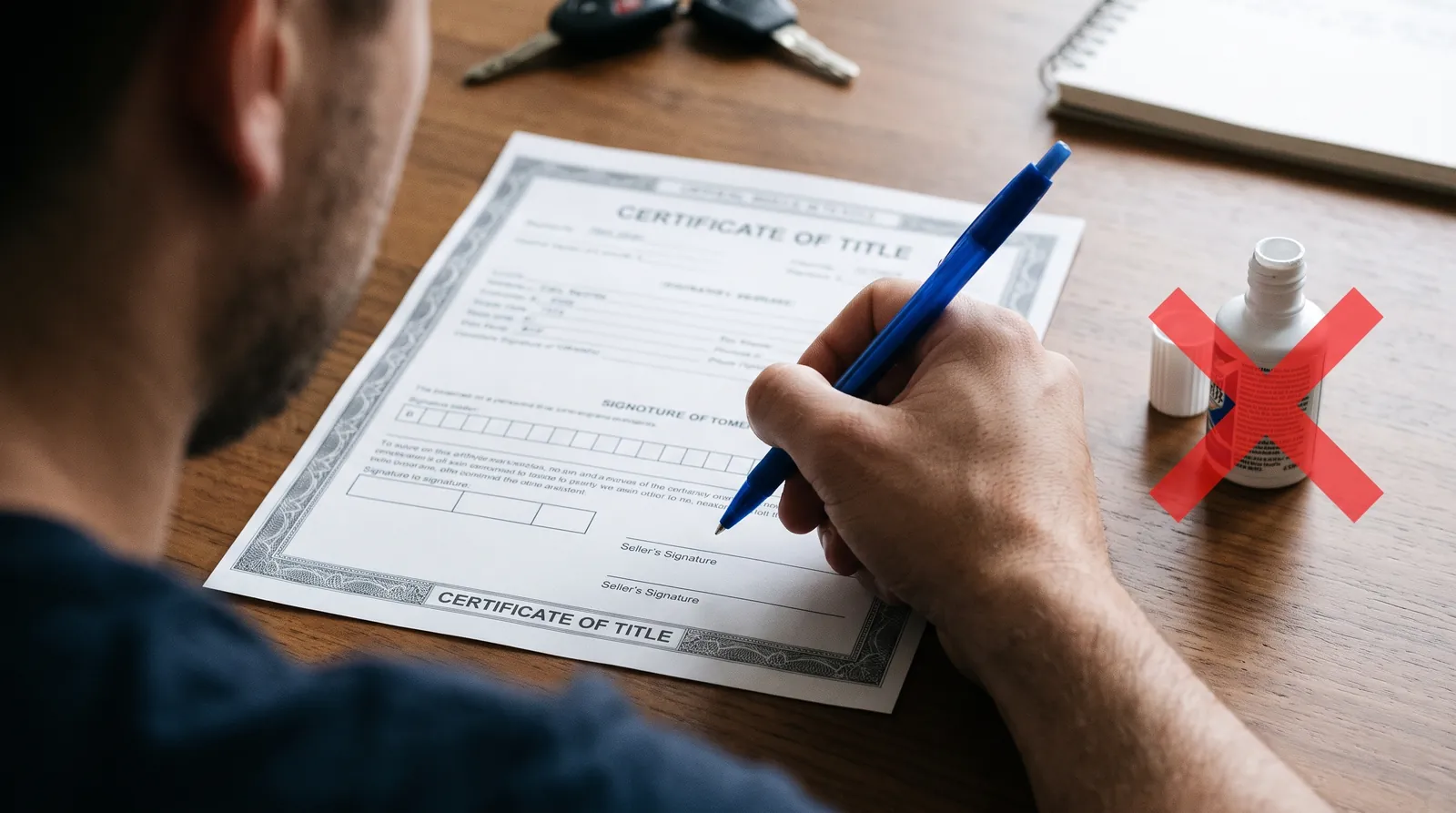
- A statement of error. Many states have a form, sometimes called a statement of facts or affidavit of correction, that explains the mistake and is filed with the title.
- A duplicate title. If the error can't be explained away, the owner applies for a duplicate and starts again.
- A reassignment. Some titles have space for a dealer reassignment, which isn't for private sellers to fix mistakes.
Call or check your state's agency before trying anything. Fixing a title the wrong way can turn a small error into a long delay.
After the title is filled out
- Make a copy or take photos of both sides of the signed title before you hand it over.
- Give the buyer the original title, any lien release, and a signed bill of sale.
- Remove your plates if your state requires it.
- File a notice of sale or release of liability where your state has one.
- Cancel or move your insurance once the buyer has the car.
If you've kept the plates, our guide on getting a new license plate covers transferring them to your next car.
Filling out a title FAQ
How do I fill out a car title when selling?
In the transfer section, write the buyer's full name and address, the sale date, the price if asked, and the odometer reading without tenths. Then every owner listed signs and prints their name on the seller lines. The buyer signs their section, and a lender signs off if a lien is shown.
What does a pink slip look like?
Pink slip is the nickname for California's certificate of title, from the days when it was printed on pink paper. It shows the owner, VIN, plate and vehicle details on the front, with numbered signature lines for the owner, co-owner and lienholder.
How do I get a pink slip for my car?
If you've paid off a loan, the lender releases its interest and the title comes to you. If it's lost, a California owner applies for a duplicate with form REG 227. Other states have their own duplicate title forms.
What if I make a mistake on the title?
Stop and don't try to fix it with white-out or crossing out. Ask your state's agency what it accepts; many want a separate statement explaining the error, and some require a duplicate title.
Sources
- NHTSA: Odometer fraud and disclosure
- California DMV: How to change vehicle ownership
- TxDMV: Form 130-U
This guide is general information. Title layouts and rules vary; follow your state's instructions.