How to Buy a Vehicle From Out of State and Register It at Home
Buying a vehicle from out of state can save money or get you the exact car you want, but it adds three jobs: getting the right paperwork from a seller in another state, getting the car home legally, and registering it under your own state's rules. This guide covers how to buy a vehicle from out of state from start to finish, with the inspection and deadline rules in 15 states.
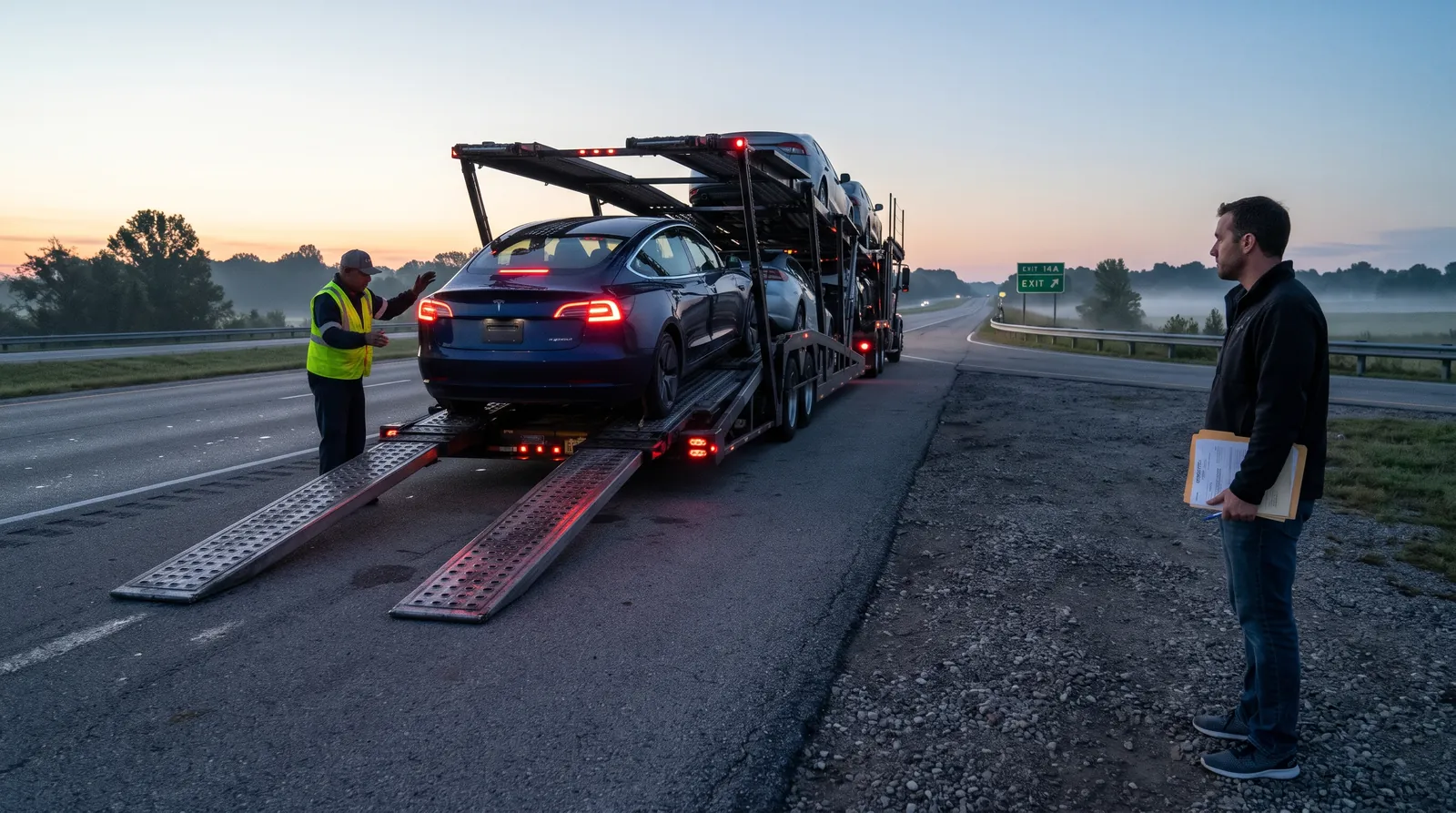
Get the title signed over to you under the seller's state rules, plus a bill of sale. Insure the car before it moves, and bring it home on a temporary permit or by transport. Then title and register it in your own state, where you'll usually pay the sales tax and may need a VIN inspection or smog test.
Before you buy: four checks that matter more across state lines
- Check the vehicle's history by VIN. Flood and salvage brands from one state can disappear from view when a car moves. Run the VIN through a history source that uses the national title database, plus a free VIN decode and recall check. Our guide to what a clean title is explains the brands to look for.
- Make sure the seller can sign the title today. The name on the title should match the seller's ID, and any loan should be paid off with a lien release ready. A missing title is far harder to fix from another state.
- Check your own state's rules first. If your state needs a smog certificate or a VIN inspection for out-of-state cars, find out before you pay, because a car that can't pass is a problem you'll own.
- Arrange an inspection near the seller. A mechanic in the seller's area can look at the car for you if you can't travel twice.
The paperwork you need from the seller
The title is assigned under the rules of the state that issued it, not yours. So if you're buying from a seller in North Carolina or Pennsylvania, the seller's signature has to be notarized or verified there, even if your own state doesn't use notaries. Collect these before you leave:
- The original title, signed by every owner listed, with your name, the date, the price and the odometer reading filled in. Our guide to where to sign a title shows every line.
- A lien release, if the title shows a lender.
- A bill of sale with the price, date, VIN and both signatures. Your home state may use it to set the tax. Our free bill of sale works in every state.
- An odometer statement if the title doesn't have room for one.
Don't accept a title that's been signed over to someone else, or signed by the seller with the buyer's section left empty. If something on the title is wrong, it's the seller's state that has to fix it, and that's much easier while you're still there.
Getting the car home
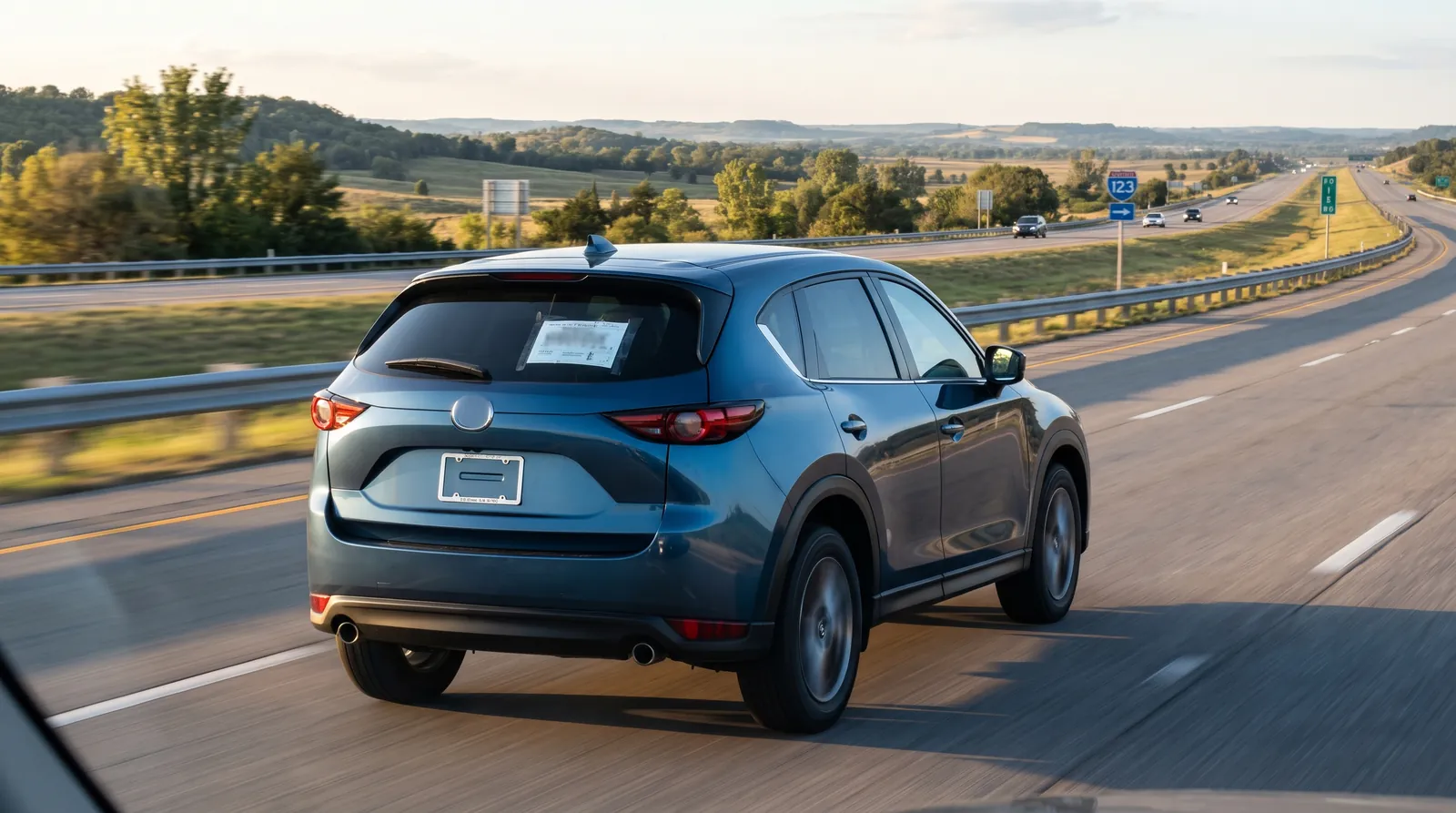
Insure the car before it moves; your insurer can add it to your policy from the purchase date. Then you have two choices. You can drive it home on a temporary permit or tag, which dealers issue routinely and some states sell for private sales. Or you can ship it with a car transporter, which avoids the permit question entirely and is often the simpler option for long distances.
The seller's plates usually stay with the seller, so don't plan on driving home on them. If you're not sure what permit applies, ask the motor vehicle agency in the seller's state or your own before you travel.
Who gets the sales tax?
In most cases you pay sales or use tax in the state where you register the car, when you title it there, not in the state where you bought it. A dealer may collect your home state's tax for you, or collect the selling state's tax; many states give credit for tax already paid elsewhere, but keep the receipt so you don't pay twice. Moving with a car you already own is often different again: Illinois, for example, exempts vehicles titled and registered elsewhere for three months or more before you move, with a Department of Revenue form. Rates and rules vary a lot, and our sister site explains which states are cheapest to buy a car in.
Registering an out-of-state car in your state
Every state has its own checklist for a vehicle titled somewhere else. These are the rules we've confirmed on each agency's site:
| State | Deadline | Inspection | Key form or step |
|---|---|---|---|
| Arizona | Check MVD | Level I VIN inspection | Title and registration application |
| California | 20 days from first use in CA | VIN verification and smog | REG 343 |
| Georgia | Check DOR | Inspection certificate | MV-1 and T-22B |
| Illinois | 30 days for new residents | None listed | VSD 190 |
| Indiana | Check BMV | Physical inspection | State Form 39530 |
| Massachusetts | Title within 10 days of purchase | State inspection | RMV-1 stamped by your insurer |
| Michigan | As soon as you're a resident | None listed | Michigan no-fault insurance |
| North Carolina | 60 days for new residents | Before first renewal | MVR-1 and NC insurance |
| Ohio | 30 days for new residents | Out-of-state VIN inspection | Title at a Clerk of Courts office first |
| Oregon | 30 days for new residents | VIN inspection | DMV2U or 735-226 |
| Pennsylvania | Check PennDOT | VIN tracing or verification | MV-41 |
| South Carolina | Check SCDMV | None listed | Form 400 and a paid property tax receipt |
| Texas | 30 days for new residents | VIN verification; emissions in 17 counties | Form 130-U |
| Utah | 60 days for new residents | Check DMV | Utah title application |
| Washington | Immediately for a car bought elsewhere; 30 days for new residents | None listed for most cars | Vehicle Title Application, after a WA license |
"Check" means the agency's page didn't give a single deadline we could quote. "None listed" means we didn't find an inspection requirement for an ordinary passenger car; your county or vehicle type may still need one.
Notes on the states people ask about most
Registering a car in Arizona (AZ) from out of state
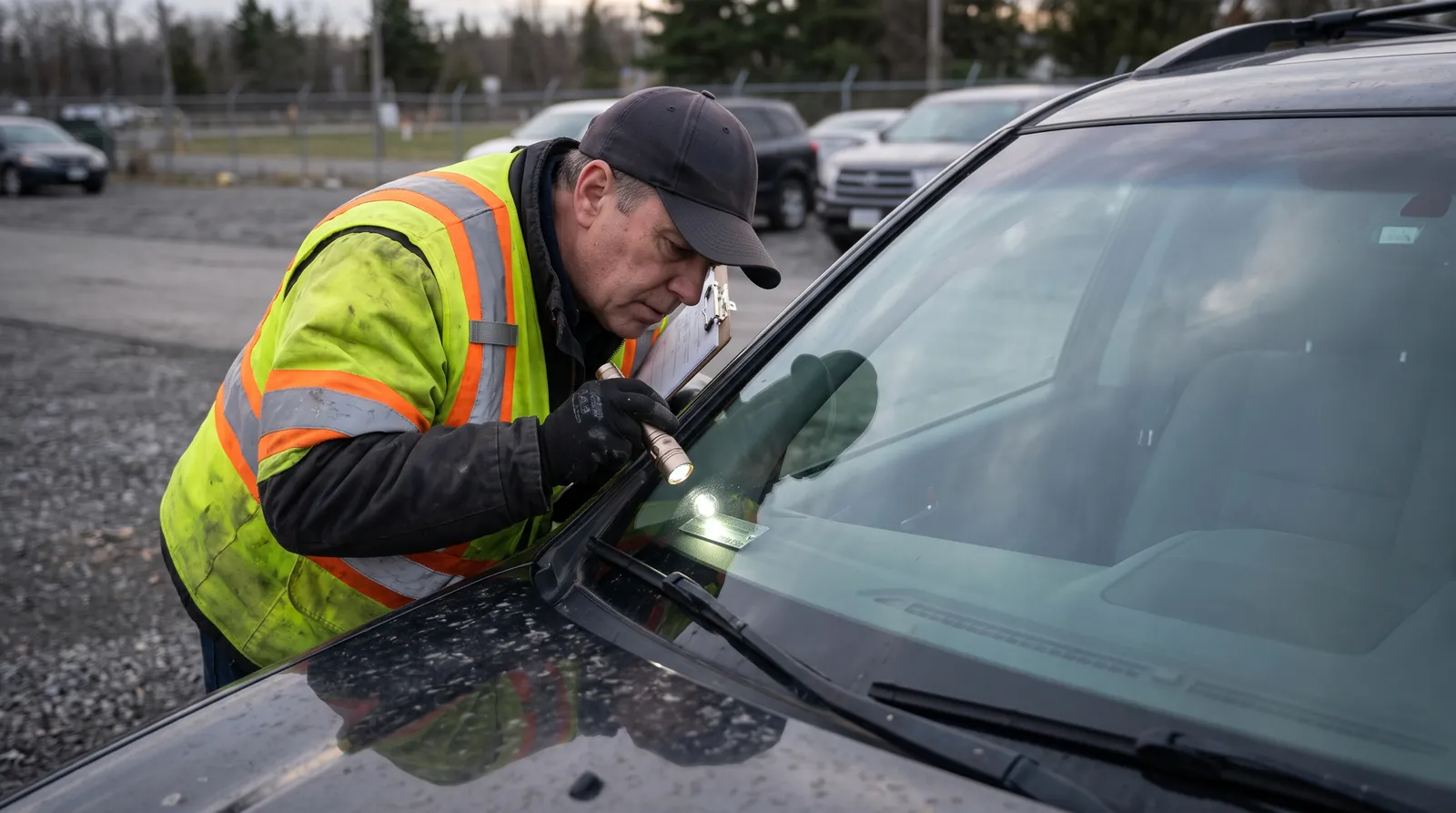
To register a car in AZ from out of state, plan for the inspection first. Arizona's Level I inspection matches the vehicle's public and hidden VINs to its ownership papers. It's done by MVD or an authorized third-party office, and it's the step out-of-state car registration in Arizona usually hinges on. Our VIN verification guide covers who performs it.
Buying a car in California from out of state
If you live in California and buy a car elsewhere, California's rules apply the moment it arrives: REG 343 signed by every owner, the out-of-state title, a California smog certificate for most gasoline cars from the 1976 model year and diesels from 1998, and a DMV VIN check. California's newer-car smog exemption doesn't apply to cars coming from out of state, so even a nearly new car needs the test. Submit within 20 days of first driving it in California. Registering a car in California from out of state is the strictest process in this list, so check smog eligibility before you buy.
Registering a car in NC from another state
Registering a car in NC from out of state starts with your license. North Carolina gives new residents 60 days, but you need an NC driver's license before you can title the car, and NCDMV doesn't accept out-of-state insurance. Bring the out-of-state title, the MVR-1 application and, for vehicles under 10 years old, the MVR-180 odometer form. You can register first and pass the NC inspection before your first renewal.
Registering a car in Washington from out of state
Washington's DOL draws a line between moving and buying. New residents have 30 days to register after getting a Washington license; a vehicle you bought in another state should be registered right away. Bring the title, the Vehicle Title Application and payment, and give a physical Washington street address.
How to register an out-of-state vehicle in Texas
Texas new residents file Form 130-U at the county tax assessor-collector's office within 30 days, with proof of Texas liability insurance and the out-of-state title. The VIN must be verified, though owners can self-certify it on the form where no emissions test is required. Texas ended safety inspections for most non-commercial vehicles in 2025, but emissions testing continues in 17 counties, and new residents pay a $90 use tax on a vehicle they already owned.
Register a car in Pennsylvania from out of state
PennDOT asks for a VIN tracing or verification for every vehicle previously titled in another state, and when a Pennsylvania resident buys from a nonresident. The VIN can be verified on form MV-41 by a police officer, a dealership mechanic or a military officer. Pennsylvania out-of-state vehicle registration then runs through an authorized agent, so registering an out-of-state car in PA means one visit for the VIN check and one to the agent, unless the agent does both.
Registering a car in Oregon from out of state
Oregon gives new residents 30 days to title and register. A car with an out-of-state title usually needs a VIN inspection, which Oregon DMV, a law enforcement officer or, for service members, military authorities can do. Passenger vehicles can then go through DMV2U; others use Form 735-226.
How to register a car in SC from another state
Pay the county property tax first, then bring the out-of-state title, SCDMV Form 400 and the fees to a branch or send them by certified mail. A vehicle registered in another state before it came to South Carolina also pays a one-time fee of up to $250.
Georgia and Utah
To register a car in GA from out of state, use the Title/Tag Application (MV-1) with a T-22B inspection certificate. Registering a car in Utah from out of state gives new residents 60 days.
Illinois, Ohio and Massachusetts
To register a car in Illinois from out of state, new residents apply within 30 days on form VSD 190. To register a vehicle in Ohio from out of state, title it first at a county Clerk of Courts title office after an out-of-state VIN inspection, then register at a deputy registrar. And to register a car in MA from out of state, start with your insurance agent, who stamps the RMV-1 application.
Buying a new car out of state vs a used one
An out-of-state vehicle purchase from a dealer is usually simpler than a private one. Purchasing a new car out of state is easiest of all, because the dealer handles the paperwork. The dealer sends the manufacturer's certificate of origin and the sale documents to your state, or gives them to you with a temporary tag, and often collects your home state's tax. Purchasing a used car out of state from a private seller puts every step on you: the title, the bill of sale, the transport and the inspection. Either way, read your own state's out-of-state checklist before you sign.
One wrinkle with a brand-new car: some states treat a vehicle bought out of state with very low mileage as subject to their own new-car rules. Oregon, for example, may ask for a use tax certificate for a new vehicle bought from an out-of-state dealer with 7,500 miles or less.
Mistakes that cost time
- Assuming your state's title rules apply to the seller. They don't; the issuing state's do.
- Skipping the smog or VIN check question. A car that can't pass your state's test may be expensive to fix.
- Driving home on the seller's plates. In most states the plates stay with the seller.
- Paying tax twice. Keep every receipt from the selling state.
- Waiting too long to register. Deadlines in this list run from immediately to 60 days, and late fees start quickly.
Out-of-state purchase FAQ
Where do I pay sales tax when I buy a car in another state?
Usually in the state where you register the car, when you title it there. If a dealer in the selling state collected tax, many states give credit for it, but check before you pay twice.
Do I need an inspection to register an out-of-state car?
Often, yes. Many states physically check the VIN of a vehicle titled elsewhere, including Arizona, California, Indiana, Ohio, Oregon and Pennsylvania, and some add a smog or safety test.
How long do I have to register a car bought out of state?
It depends on your state. Washington says a vehicle bought in another state should be registered immediately; new residents typically get 30 days in Illinois, Ohio, Oregon and Texas, and 60 in North Carolina and Utah.
Can I drive the car home without plates?
Only with a valid temporary permit or tag, and with insurance in place. Dealers usually issue a temporary tag; for a private sale, ask the selling state's or your home state's agency what transit permit it offers, or ship the car.
Sources
- NCDMV: Moving to North Carolina
- Washington DOL: Moving to Washington, vehicle registration
- Illinois SOS: Titles and plates for new residents
- TxDMV: New to Texas
- California DMV: Registering an out-of-state vehicle
- Ohio BMV: Out-of-state title process
- Oregon DMV: New to Oregon
- Arizona, Georgia, Indiana, Pennsylvania, Massachusetts, Michigan, South Carolina and Utah: see our VIN verification guide and title transfer checklist for each agency's page.
This guide is general information, not legal advice. Your home state's motor vehicle agency has the final word on what it needs.