How to Register a Car: New Vehicle Registration, Step by Step
Whether you just bought a car, moved to a new state or brought home a trailer, new vehicle registration follows the same basic pattern everywhere: prove you own it, prove it's insured, pay the fees, and leave with plates. Here's that pattern, what changes between states, and the specific steps in South Carolina, California, Oregon, Michigan and Ohio.
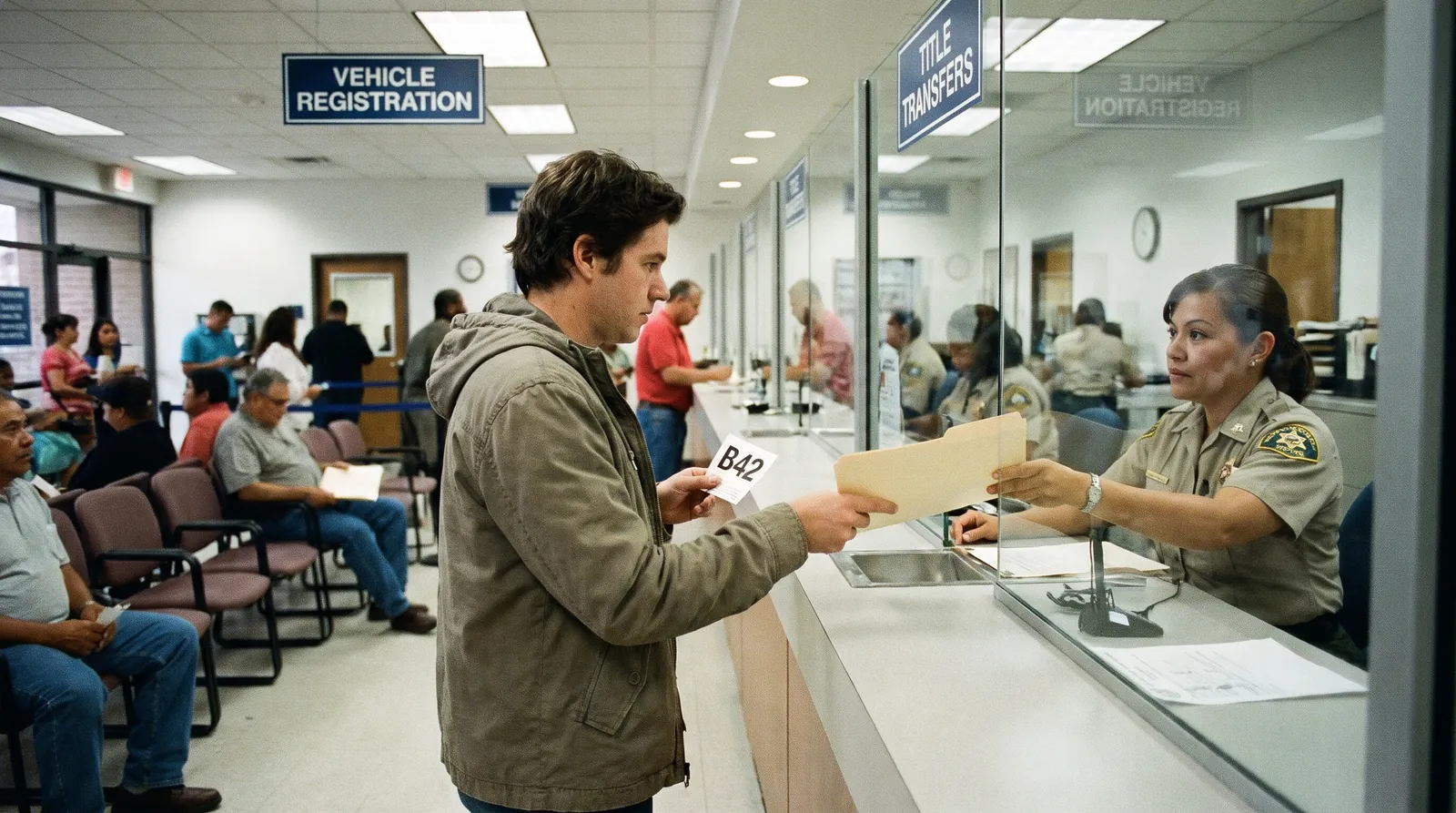
Bring the title (signed over to you, or your out-of-state title), proof of insurance, your ID and the state's application to the motor vehicle office or its online service. Pay the title fee, registration fee and any tax, and you'll get plates and a registration card. Some states first want an emissions test, a VIN inspection or a paid property tax bill.
Title first, registration second
The title says who owns the car; the registration lets it on the road. Most states handle both at once when you first register, but the order matters: you can't register a car you can't prove you own. Ohio makes the split visible. A county Clerk of Courts title office issues the Ohio title, and only then does a Deputy Registrar license agency register the car and hand over plates.
A first registration is also different from a renewal. Renewals are routine and nearly always available online; the first one usually isn't, because someone has to look at the title, check the VIN or collect tax.
What do you need to register a car?
The list is shorter than people fear. Expect most of these:
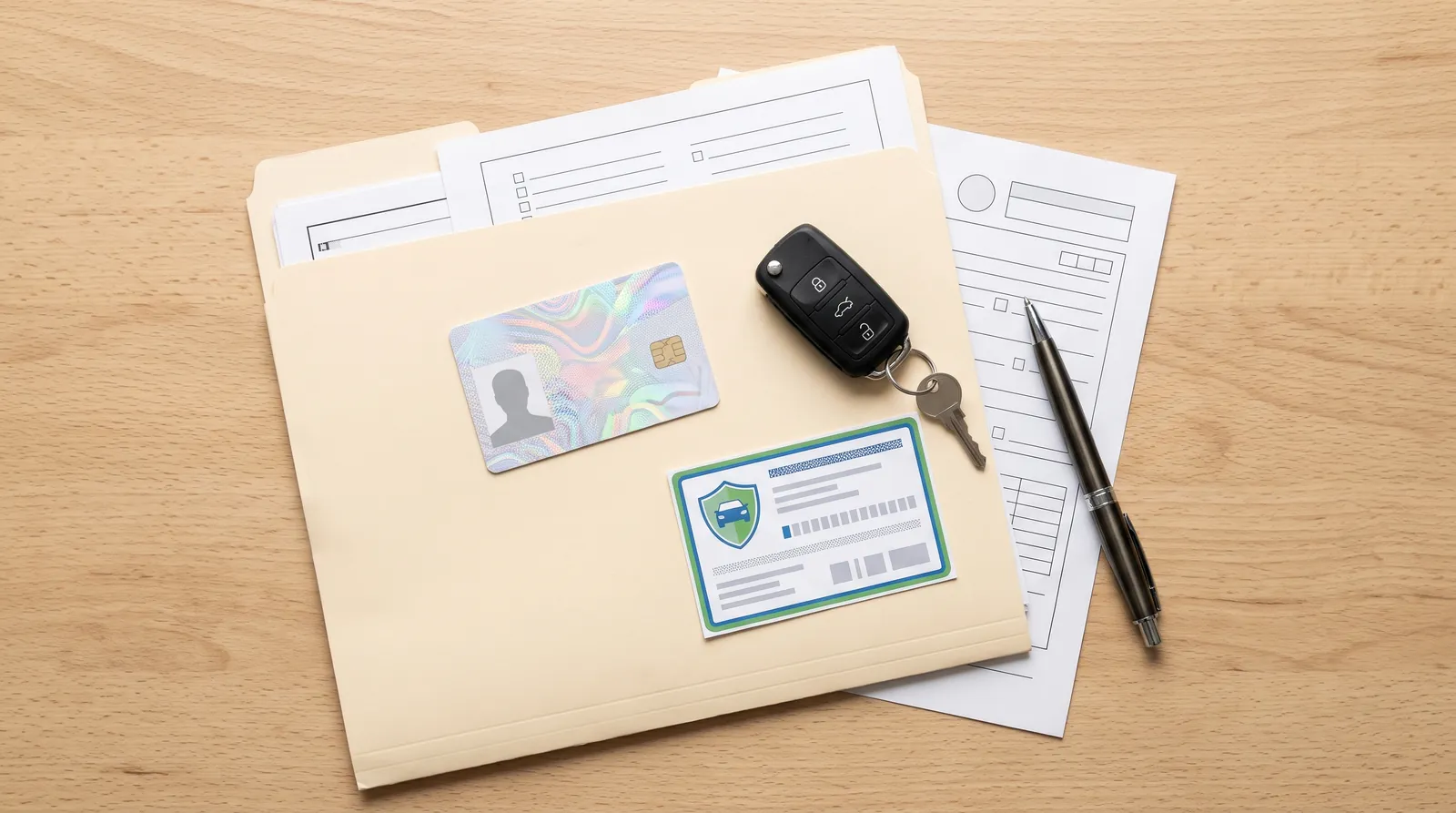
- Proof of ownership. The title signed over to you, or the manufacturer's certificate of origin for a brand-new car. Bring the original; Michigan, for one, says photocopies of the title aren't accepted.
- Proof of insurance that meets your new state's rules. Michigan requires Michigan no-fault coverage and won't accept an out-of-state policy.
- Your driver's license or ID. Some states have an alternative when you don't hold one of theirs; South Carolina asks for a Statement of Vehicle Operation (Form TI-006) if you have no SC license or ID. Our guide on registering a car without a license covers the other options.
- The application. Each state has its own: Form 400 in South Carolina, REG 343 in California, RD-108 in Michigan, 735-226 in Oregon.
- Inspections, where required. Emissions or smog tests in some states, and a VIN check for cars coming from out of state.
- Payment. Title fee, registration fee, plate fee and sales or use tax.
If you bought from a private seller, bring the bill of sale too. Even where it isn't required, it records the price the tax is based on. Bought from a dealer instead? See whether the dealership registers your car.
How to register a car, step by step
- Get insurance before you go. The office will ask for proof, and you can't legally drive the car home in most states without it. Our guide on insurance and registration explains the few exceptions.
- Check whether your car needs an inspection first. Do the smog test or VIN inspection before the visit, so you aren't sent away to get it.
- Fill in the state's title and registration application. Download it from the agency's site, or complete it online where that's offered.
- Visit the office, or submit online or by mail. Bring originals, not copies.
- Pay and collect your plates. Many offices hand over plates and a sticker on the spot; titles usually come by mail.
Where can I go to get my car registered?
It depends on how your state is organized. Some states run their own offices (a DMV, BMV, MVD or Secretary of State). Others use county offices: Georgia's County Tag Offices, Tennessee's county clerks, and Colorado's county motor vehicle offices. Several license private agents to do the paperwork, such as Pennsylvania's authorized PennDOT agents and Ohio's deputy registrars. Our registration renewal finder links to each state's official vehicle pages, which also list the offices for first registrations.
State-by-state: what to know
Registering a car in South Carolina
What do you need to register a car in SC? South Carolina asks for the completed title application, SCDMV Form 400, the title, and the fees. A new plate needs a paid property tax receipt in the new owner's name, which means a stop at the county before the DMV. SCDMV's fee schedule lists a $15 title fee and, for most passenger cars, $40 for a registration that usually runs two years. A vehicle registered in another state before coming to South Carolina also pays a one-time fee of up to $250. You can register a vehicle in SC at a branch office or by certified mail. So here's how to register a car in South Carolina in order: pay the county property tax, then take the title, Form 400 and fees to SCDMV.
What do you need to register a car in California?
For a car coming from another state, California DMV wants the Application for Title or Registration (REG 343) signed by every registered owner, the last out-of-state title, a smog certificate for most gasoline cars from 1976 on and diesels from 1998 on (motorcycles are exempt), and a VIN verification, usually done by a DMV employee. California's newer-vehicle smog exemption doesn't apply to cars arriving from out of state. The DMV says to submit within 20 days of first driving the car in California, and to send the application and fees on time even if something like the smog test is still missing. That's how to register a vehicle in CA when it comes from another state. For a car bought in California, see our California title transfer guide.
OR DMV registration
New Oregon residents have 30 days to title and register. Passenger vehicles can use the guided DMV2U application; other vehicles use Form 735-226. A car with an out-of-state title may need a VIN inspection, and a brand-new car bought out of state with 7,500 miles or less may need a use tax certificate from the Oregon Department of Revenue. If a lender holds your title, Oregon DMV has you send the paperwork to the lender with a Security Interest Holder letter (Form 735-6603L).
What do I need to register my car in Michigan?
Michigan expects new residents to register as soon as they establish residency. Bring the original title, proof of Michigan no-fault insurance, your license or ID, ideally your previous registration, and payment. Most people leave a Secretary of State office with a plate, a tab and their registration; the Michigan title follows by mail. If a lender holds your out-of-state title, Michigan issues a "registration only" plate without a Michigan title. The same offices handle it when you register a trailer in Michigan.
Register a new vehicle in Ohio
Ohio splits the job in two. Title the vehicle first at any county Clerk of Courts title office; a used vehicle from another state needs an out-of-state VIN inspection, done at a deputy registrar, a participating title office or a participating dealer. Then register it at a Deputy Registrar license agency with the Ohio title, memorandum title or electronic title receipt. New residents have 30 days.
Bought the car in another state? See how to buy a vehicle from out of state for the seller's paperwork and the drive home.
Other states people ask about
- Registering a car in Massachusetts from out-of-state: registration starts with your insurance agent, who completes and stamps the RMV-1 application. Expect 6.25% sales tax, on the price or book value, if you bought the car recently.
- Registering a vehicle in Arizona from out-of-state: MVD inspects the VIN of a vehicle titled elsewhere; our VIN verification guide covers which states do this.
- Illinois vehicle registration transfer: plates stay with the owner, and moving them to a newly bought vehicle costs a $25 transfer fee on top of the title fee.
- Pennsylvania: a private sale is registered through an authorized agent, using the title and the MV-4ST, which also collects sales tax.
Can I do my vehicle registration online?
For renewals, almost always. For a first registration, sometimes. Oregon's DMV2U handles many passenger vehicles, and Michigan allows an online transfer for eligible private sales. But most states still want an in-person visit when the vehicle is new to them, because someone has to see the out-of-state title, inspect the VIN or confirm the smog result. If an online system refuses you, it's usually for one of those reasons.
How do you re-register a car?
Re-registering usually means one of three things. If your registration expired, renew it, paying any late fee; our renewal finder has every state's page. If you moved, you register as a new resident in the new state, as above. And if a car sat unregistered for a while, some states ask for a new inspection or proof of insurance before they renew. In each case, the title stays the same; only the registration changes.
Do you need a title to register a financed car?
No, but you need the lender's cooperation. When a bank holds the title, states have workarounds: Michigan issues a registration-only plate based on your previous registration, and Oregon has you route the paperwork through the lender with its Security Interest Holder letter. Call the lender early, because the title often has to travel between them and the agency.
How to register a car with a bill of sale only
For a titled car, you can't; the title is the proof of ownership. A bill of sale alone works only where the vehicle was never titled. New York doesn't issue titles for cars from the 1972 model year or older, so a transferable registration and a bill of sale move ownership instead, and Massachusetts accepts the previous owner's registration with a bill of sale for vehicles exempt from titling because of age. Many states also register light trailers without a title. If you've bought a titled car with no title, read our guide to replacing a lost car title with the seller first.
How long does registration take to come in the mail?
Often you don't wait at all: in many states, including Michigan, you leave the office with plates, a sticker and your registration, and only the title is mailed. When the registration itself is mailed, timing varies. Wisconsin says to allow 7 to 10 business days after it finishes processing. If yours is late, check that the agency has your current address before calling.

Checking a vehicle registration
You can usually check your own registration status online through the agency's site, often with just the plate number and part of the VIN. Checking someone else's registration is a different matter: the owner's name and address are protected by the federal Driver's Privacy Protection Act, so a registration lookup on another person's car goes through the state's record request process and needs a permitted reason. A Michigan vehicle registration lookup or a PA car registration lookup on a stranger's car runs into the same rule. Our license plate lookup guide explains what each state releases.
Can you register a car in a state you don't live in?
As a rule, no. Few states allow non-resident vehicle registration at all, because states register vehicles for their residents; Oregon, for example, says you must be a resident of or domiciled in Oregon to register there. Students, members of the military and people with homes in two states have special rules in many places, so check with the state where the car is kept.
Car registration FAQ
What do I need to register a car?
Usually the title signed over to you (or the out-of-state title if you're moving), proof of insurance, your driver's license or ID, the state's title and registration application, and the fees and tax. Some states add an emissions test, a VIN inspection or a property tax receipt.
Can I register a car with only a bill of sale?
Only where the vehicle isn't titled. New York doesn't title cars from the 1972 model year or older, and Massachusetts exempts some older vehicles from titling; there a bill of sale plus the old registration can work. For a titled car, you need the title.
Can I register a car online?
Renewals almost always can be done online. A first registration often can't, because the agency has to see the title, inspect the VIN or check documents. Some states, such as Oregon through DMV2U and Michigan for eligible private sales, do offer online options.
How long does it take to get registration in the mail?
In many states you leave the office with plates, a sticker and a registration. When the registration or title is mailed, expect anywhere from a few days to a few weeks; Wisconsin, for example, says to allow 7 to 10 business days after it completes your application.
Sources
- SCDMV: Titles and registration and fees
- California DMV: How to register a vehicle from out of state
- Oregon DMV: New to Oregon
- Michigan Secretary of State: New Michigan residents
- Ohio BMV: Out-of-state title processes and new Ohio residents
- WisDOT: Title and registration application status
This guide is general information, not legal advice. Your state's motor vehicle agency has the final word on what it needs.