What to Do With License Plate After Selling Car: Keep, Transfer or Surrender
The buyer has the keys and the signed title. But the plates are still on the bumper, and what happens to them next depends entirely on your state. This guide explains what to do with license plate after selling car: when to take the plates off, how to transfer them to your next vehicle, when to surrender them, and the rules in Illinois, Michigan, Ohio, New York, Texas and California.
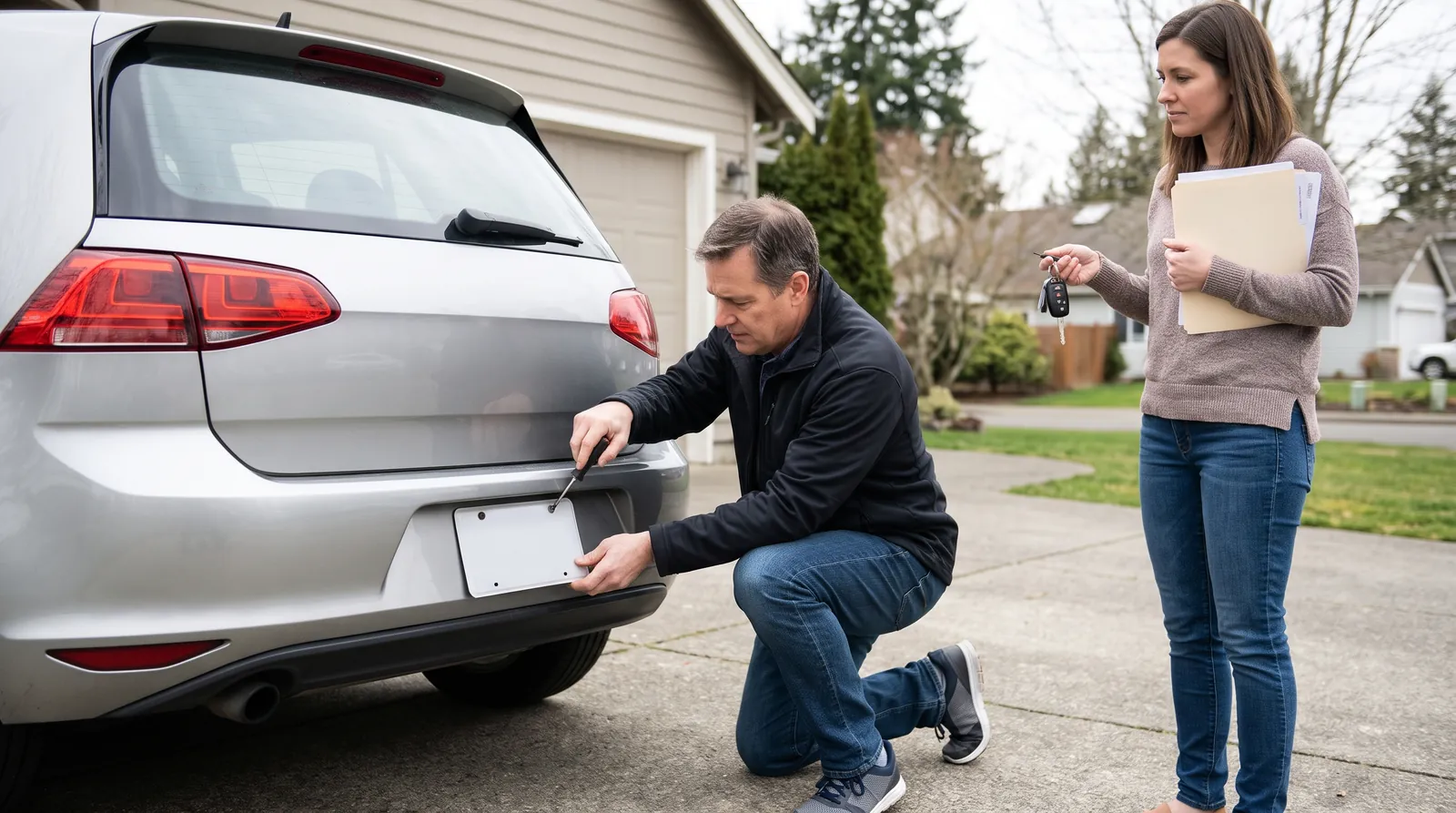
In most states the plates belong to you, not the car: take them off, then move them to your next vehicle or turn them in. In a few states, such as California, plates usually stay with the car. Either way, file your state's notice of sale, and don't cancel insurance until the plates are dealt with.
Do plates go with the car or the owner?
This is the first thing to find out, because everything else follows from it.
- Plates stay with the owner in most states, including Illinois, Michigan, Ohio, New York and Texas. The seller removes them, and the buyer gets new plates or transfers their own.
- Plates stay with the car in a few states, California the best known. The buyer keeps the plates, and the seller files a notice of sale.
Specialty and personalized plates often follow the owner even in states where standard plates stay with the car. If you have a vanity plate, assume you'll want to keep it and check how to move it.
Your three options when plates stay with you
| Option | When it makes sense | What to do |
|---|---|---|
| Transfer to your next car | You're buying another vehicle of the same type | Apply for a plate transfer when you register the new car |
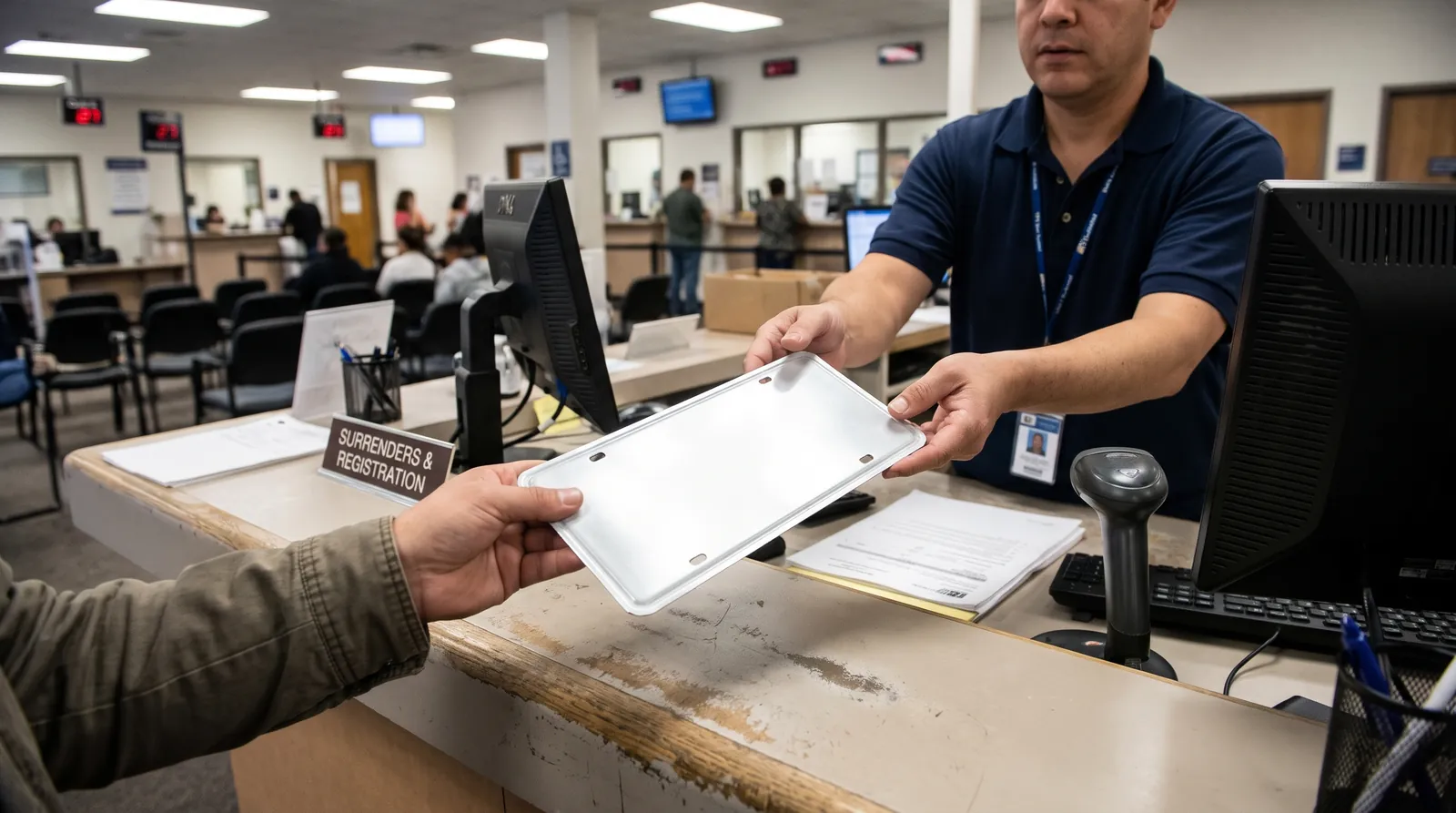
| Surrender or cancel | You're not replacing the car, or moving out of state | Return plates to the agency or cancel them, as your state directs |
| Keep for later | Your state allows holding plates for a future vehicle | Store them safely and check how long you can wait |
Never sell or give your plates to the buyer, and never leave them on the car "until the buyer gets new ones." Anything the car does with your plates on it, from tolls to crashes, can come back to you.
License plate transfer in Illinois
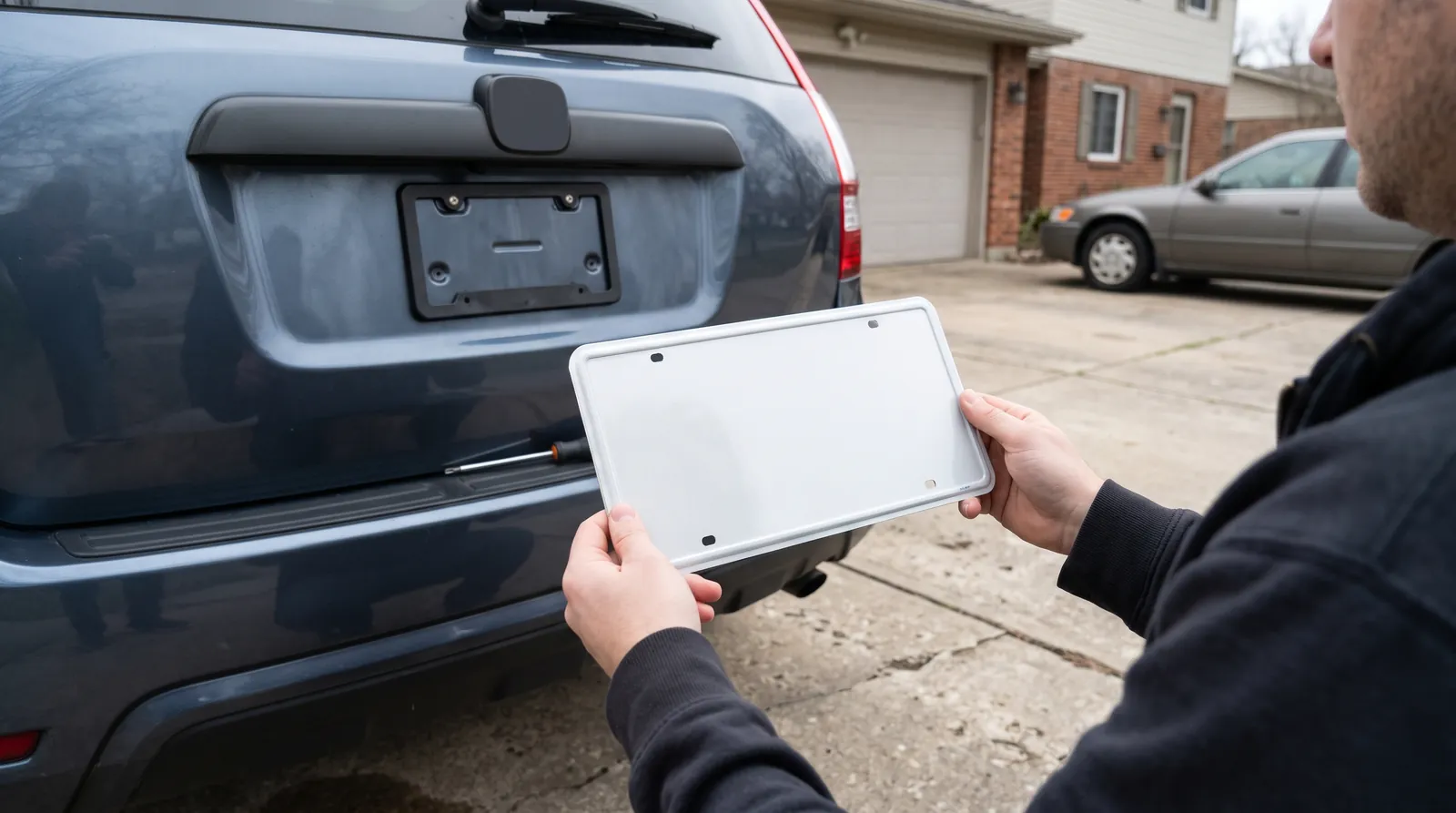
Illinois plates belong to the owner. When you sell, remove them. To use them on another vehicle you own, apply for a license plate transfer in Illinois with the Application for Vehicle Transaction (form VSD 190), at a Secretary of State facility or by mail, and pay the transfer fee listed on the state's fee schedule. Plates can only move between vehicles of the same type; a car plate can't go on a motorcycle. If you won't use them again, follow the Secretary of State's instructions for returning or disposing of them, and keep proof of the sale date in case a ticket or toll arrives later.
Michigan plate transfer
Michigan plates are issued in the owner's name, and you can transfer a plate issued in your name at any Secretary of State office. The state's own fee list is clear:
- $15 to transfer a plate and registration to a car you bought in a private sale.
- $10 if you bought the car from an immediate family member.
- $10 to $15 to move a plate between vehicles you already own, depending on the receiving vehicle's registration fee.
Don't wait: under Michigan's vehicle code, a transfer needs to be made and paid within 15 days, or the vehicle is treated as unregistered. A Michigan plate transfer also carries over the time left on your registration, which saves money compared with new plates.
Transfer license plate to new car in Ohio
Ohio plates also follow the owner. To transfer a license plate to a new car in Ohio, title the new vehicle in your name first at a county Clerk of Courts title office, then go to a deputy registrar with the new title, your ID, proof of insurance and your old registration. The registrar moves the plates and the remaining registration time to the new car for a small transfer fee. Ohio law also lets you move special plates to another vehicle you own or lease. If you don't want the old plates, the deputy registrar can cancel them and issue new ones.
New York: surrender before you cancel insurance
New York is the state where getting the order wrong costs the most. The DMV says you must surrender your plates and registration before you cancel the car's liability insurance. If you cancel insurance first, the DMV can suspend your registration and even your driver license. You can transfer plates to another car you're registering, or surrender them at a DMV office and keep the receipt, form FS-6T, as proof for your insurer. The DMV also warns not to hand your plates to anyone else unless that person will surrender them for you.
Texas
In Texas, the seller has the option to remove the plates and the registration sticker. The plates can go on another vehicle of the same classification that you buy, or you can keep them for a future transfer; the sticker doesn't transfer. If the buyer can't reach the county tax office right away, Texas offers a Vehicle Transit Permit so they can drive the car legally without your plates. Our Texas bill of sale page covers the rest of a Texas sale.
California: plates usually stay with the car
California works the other way. Standard plates stay with the vehicle, and the buyer drives away with them. The seller's job is to file a release of liability with the DMV within five days, which records the date the car stopped being yours. Personalized and special interest plates are the exception: you can keep those and reassign them to another car. Our California title transfer guide covers the release of liability.
Everywhere else
If your state isn't listed, ask three questions on its agency's site or by phone:
- Do plates stay with the car or the owner?
- If they stay with me, how long can I keep them before transferring or surrendering?
- Do I need to surrender plates before canceling insurance, and is any registration fee refundable?
Our registration renewal finder links to each state's motor vehicle agency, where these answers usually sit on the plates page.
Trading in at a dealer
When you trade a car in, the dealer usually asks what you want to do with the plates. In owner-plate states, the dealer can often move them straight onto the car you're buying, as part of the paperwork it files for you. Tell the salesperson before the deal is written up, and take the plates off the trade-in yourself if the dealer doesn't. If you're not buying another car from that dealer, take the plates with you and handle them as you would after a private sale. Our guide on whether the dealership registers your car covers what the dealer files.
Selling before a move out of state
If you sell your car because you're moving, the old state's plates are of no use to you in the new one. Check whether your state wants them surrendered or cancelled, and do it before you leave. In states that refund unused registration fees, surrendering the plates may get you some money back. If you keep driving another car registered in the old state until you register it in the new one, keep those plates on that car until the new state issues its own, then follow the old state's instructions for returning them.
Personalized and specialty plates
Personalized plates are almost always yours to keep, even in states where standard plates stay with the car. You usually have to ask to keep them, and you may need to transfer them to a new vehicle or put them on hold for a fee. If you don't, the state may release the combination after a set time, and someone else can claim it. Take the plates off before the sale, and ask your state's agency how long it will reserve the characters.
If the buyer drove off with your plates
It happens, especially in a rushed sale. Contact the buyer and ask for the plates back, or for proof they've been surrendered. If you can't reach the buyer, file your notice of sale or release of liability immediately, report the plates to your state agency, and in some states report them to police. Keep the bill of sale showing the time of the sale; it's your best defense against tolls and tickets that follow.
What the buyer does without your plates
If you take your plates, the buyer needs a legal way to drive the car home. Options include a temporary permit or tag from the state, transferring their own plates, or trailering the car. Talk about it before the sale so the buyer comes prepared. A buyer driving away with no plates, or with yours, is a problem for both of you.
Protect yourself after the sale
- File a notice of sale or release of liability where your state has one, as soon as the car is sold.
- Keep a copy of the signed title and the bill of sale, showing the date and time of sale.
- Remove toll transponders and close or update toll accounts linked to the plate.
- Cancel insurance last, after the plates are transferred or surrendered.
- Ask about a refund of unused registration fees, which some states give when you surrender plates.
Old, expired or damaged plates
If plates are expired, damaged or no longer valid, your state may want them back, may let you recycle them, or may let you keep them as a souvenir once they're cancelled. Don't toss valid plates in the trash, where someone could pick them up. If you've replaced plates rather than sold a car, our guide on getting a new license plate covers what to do with the old ones, and our guide on how to put on a license plate helps when they go on your next car.
Plates after a sale FAQ
What do I do with my license plate after selling my car?
It depends on your state. In many states plates stay with the seller: remove them, then transfer them to your next car or surrender them. In others, such as California, plates generally stay with the car. In New York you must surrender plates before canceling the car's insurance.
How do I transfer a license plate to a new car in Michigan?
At a Secretary of State office or online where offered. Michigan's plate transfer fee is $15 for a car bought in a private sale, $10 for one bought from an immediate family member, and $10 to $15 between vehicles you already own.
Can I leave my plates on the car for the buyer?
Only where your state says plates stay with the car. Elsewhere, leaving them on means tolls, tickets and even crimes involving the car can be traced to you. Remove them and give the buyer time to get a temporary permit.
Do I need to cancel my registration after selling?
In many states, yes, or at least file a notice of sale or release of liability. Some states refund unused registration fees when you surrender plates; others don't. Cancel insurance only after the plates and registration are handled.
Sources
- Michigan Secretary of State: Plate transfer
- New York DMV: How to surrender your plates
- Ohio Revised Code 4503.12: Transfer of registration
- Illinois.gov: Transfer license plates between vehicles
- TxDMV: FAQs
This guide is general information. Plate rules are set by each state; check with your state's motor vehicle agency before the sale.