How to Put On a License Plate: Rear, Front and Cars With No Bracket
New plates arrived in the mail, or you just picked them up at the counter. Now they need to go on the car. Here's how to put on a license plate in about ten minutes, with the tools you probably already have. This guide covers rear and front plates, cars that came without a front bracket, the screws to use, frames and covers, and what your state expects to be visible once the plate is on.
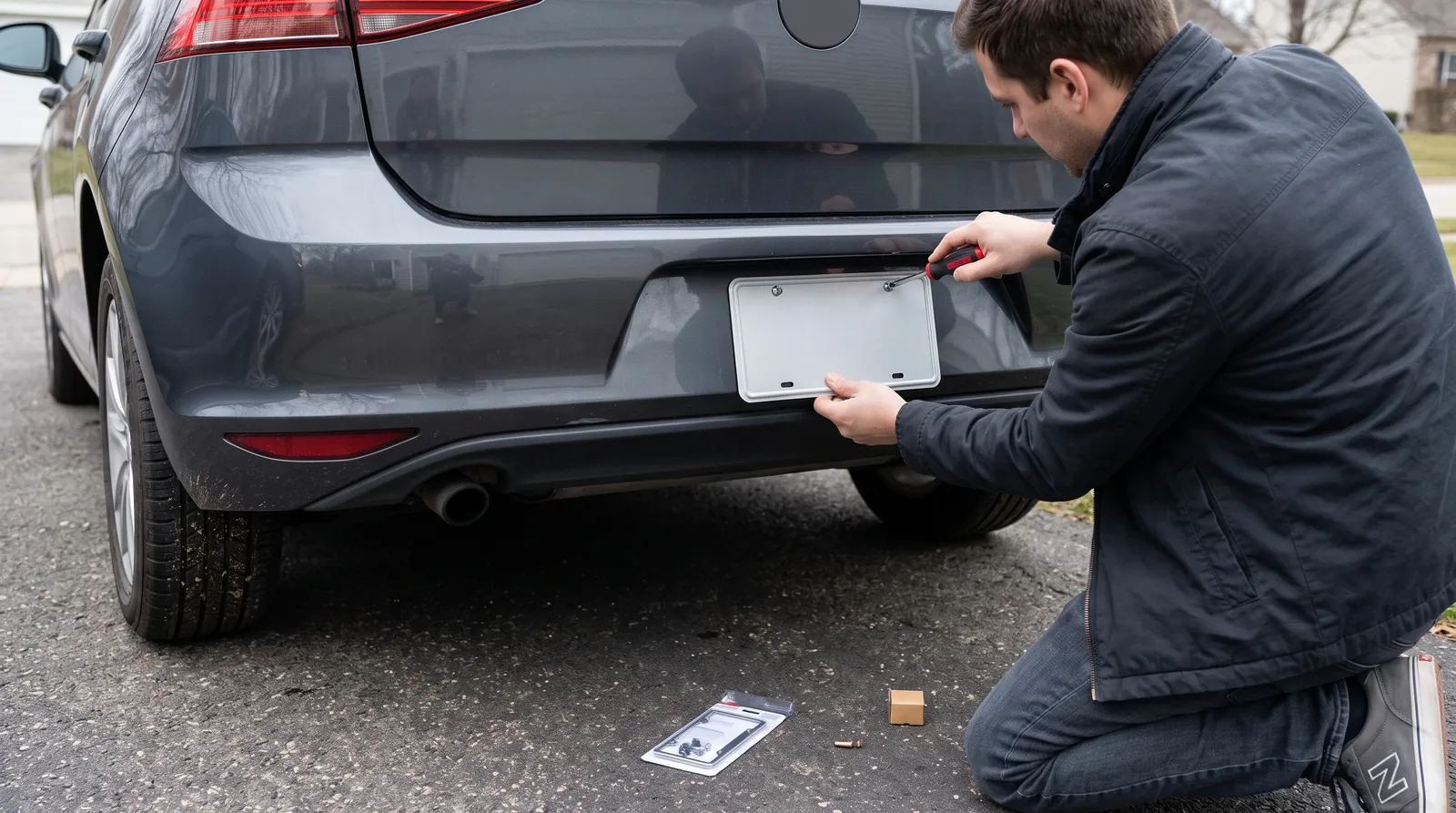
Take off the old plate, line the new plate up with the holes on the car, start each screw by hand so it doesn't cross-thread, then tighten with a screwdriver until snug. Put the registration sticker where your state says, and check the plate light. Front plates may need a bracket first.
What you need
- A screwdriver that fits your plate screws, usually a Phillips head, or a small socket or nut driver if the screws have hex heads.
- Screws. Reuse the old ones if they're in good shape. If not, take one to a hardware or parts store to match the thread; sizes vary by make.
- A cloth to clean the mounting area.
- Optional: a plate frame, rubber or plastic washers to stop rattles, and anti-theft screws.
That's it for most cars. Learning how to put on a license plate at the front takes a bit more on cars without a bracket, covered below.
How to put license plate on car: the rear plate
- Remove the old plate. Unscrew it, keeping the screws. Some states want old plates returned or destroyed; check before throwing one out.
- Clean the area. Wipe away dirt so the plate sits flat and the sticker has a clean surface if it goes on the car.
- Check the mounting holes. Most cars have threaded holes or plastic inserts in the trunk lid or bumper. If an insert is cracked or missing, replace it; it's what the screw bites into.
- Hold the plate in place. The plate's top holes are usually the ones that line up. Many cars use only the two top holes; that's normal.
- Start the screws by hand. Turn each one a few times with your fingers. If it resists, back it out and try again; forcing it strips the thread.
- Tighten until snug. Use the screwdriver to finish. Don't overtighten, especially into plastic inserts, or the plate will bend and the insert will crack.
- Add the sticker if your state uses one. Our guide on license plate stickers shows where it goes.
Last, turn on your headlights and check the plate light. Most states require the rear plate to be lit at night, and a burnt-out bulb is a common reason for a stop.
How to put on license plate at the front
More than half of states, plus Washington, DC, require a front plate as well as a rear one. If yours does, you'll get two plates. Our front plate guide lists which states require one.
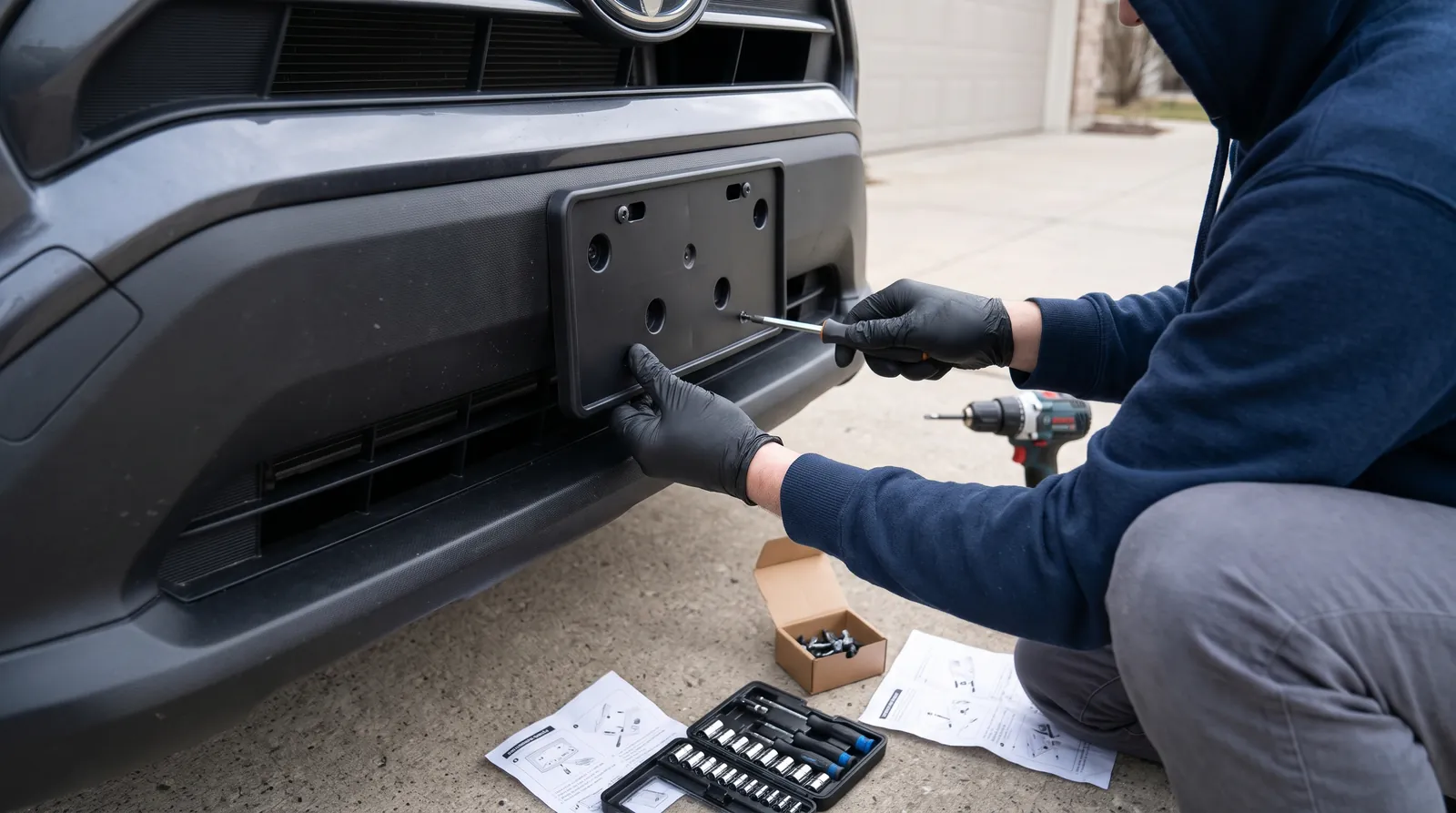
Many cars have a front bracket already attached or a set of holes in the bumper cover. If so, mounting is the same as the rear: line up, start by hand, tighten until snug. If your car has a smooth bumper with no holes, keep reading.
When there's no front bracket
Cars sold in many states come without a front plate bracket installed, because the factory builds them for rear-only states. You have a few options:
- Check the trunk or glove box. Many new cars ship with the front bracket and screws in a bag, waiting to be installed.
- Buy the factory bracket. A dealer's parts counter can sell the bracket made for your model, often with a template showing where to drill.
- Use a no-drill bracket. Several designs clamp into the lower grille opening or screw into the tow hook point behind a small cover in the bumper. They leave the bumper intact, which helps if you move to a rear-only state or sell the car.
- Drill as a last resort. If you do drill, follow the factory template and check what's behind the bumper cover first; parking sensors, radar units and cooling parts sit there on many newer cars.
Avoid taping, gluing or zip-tying a plate loosely to the grille. It may fall off at speed, and some states treat a plate that isn't securely fastened as improperly displayed.
Temporary tags and paper plates
Before your metal plates arrive, you may be driving with a paper temporary tag from a dealer or the state. It goes where the rear plate would, or in the rear window if your state allows that, and it must be readable from behind. Tape alone often fails in rain; a plastic sleeve screwed into the plate holes keeps a paper tag flat and dry. When the real plates come, remove the temporary tag, and keep it until the new registration is in the car, in case you're asked for proof of the dates.
When to put plates on after buying a car
As soon as you have them. Most states expect plates on the car before it's driven on public roads, unless you're using a temporary tag or a transit permit. If you bought from a dealer, the dealer often installs the plates for you when they arrive, or mails them so you can do it yourself. If you transferred plates from your old car, move them as soon as the transfer is approved; driving the new car with no plate, or with a plate the state hasn't linked to it yet, can get you stopped. How to put on a license plate you've transferred is no different from a new one, but double-check the registration card shows the new car's VIN.
Keeping plates and stickers from being stolen
Plate and sticker theft is common, because a current sticker or a clean plate is worth something to someone driving a car with expired tags. Tamper-resistant screws are the simplest defense. Some owners also score the sticker with a few light cuts once it's on, so it tears if someone tries to peel it, and others take a photo of the plate and sticker for their records. If a plate is stolen, report it to police right away and then to your state's agency; a police report helps if the plate turns up on another car.
Picking the right screws
Plate screws look alike but aren't. Cars from different makers use different threads, so a screw from one car may not fit another. The easiest fix is to take an old screw to the store and match it. A few upgrades are worth it:
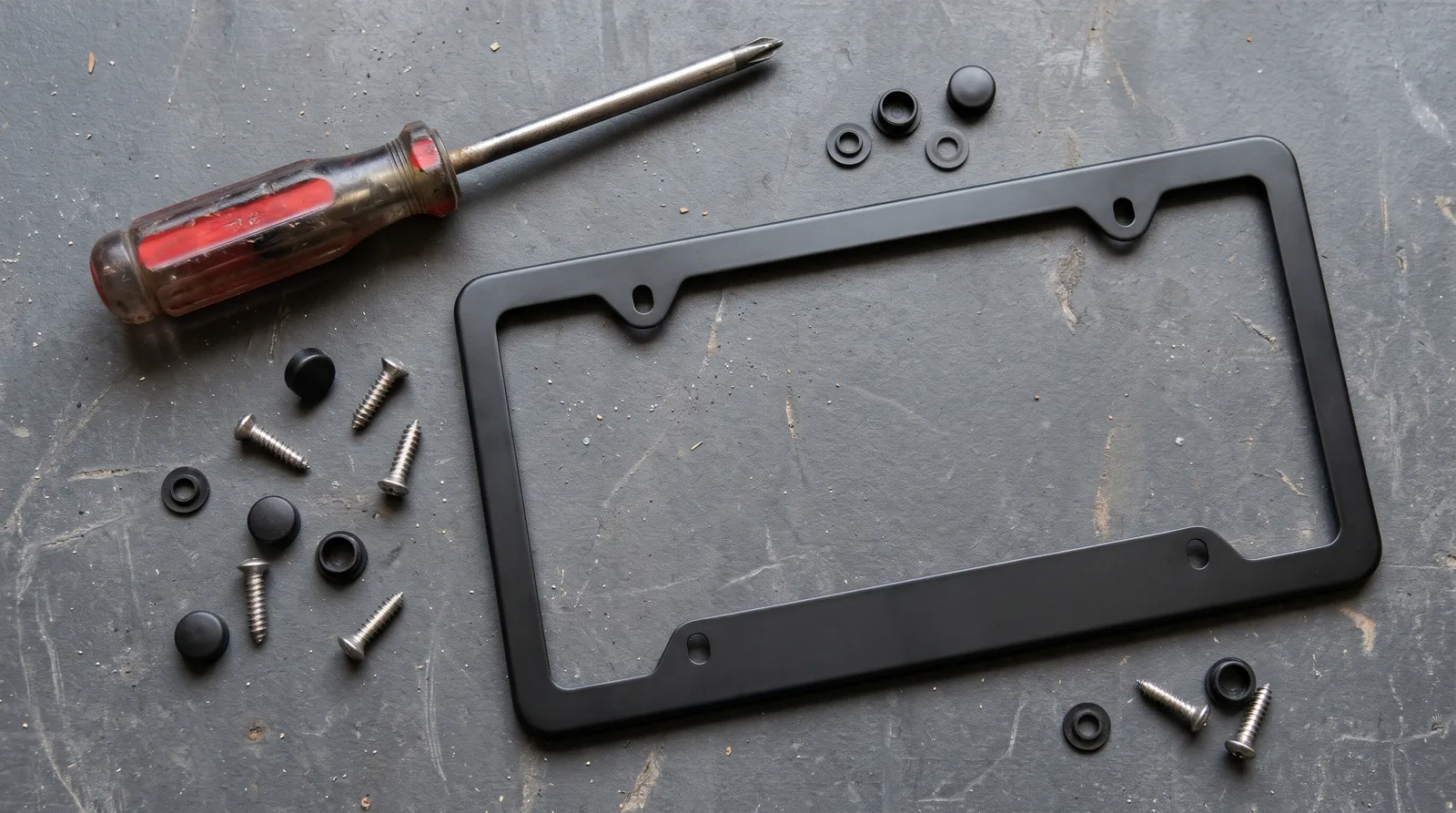
- Stainless steel screws don't rust and won't leave orange streaks down the plate.
- Locking or tamper-resistant screws need a special bit to remove, which deters plate and sticker theft.
- Nylon washers between the screw and the plate stop rattling and protect the paint.
- Screw caps in a color that matches the car hide the heads.
Frames and covers
A plate frame is fine in most states as long as it doesn't hide anything the state requires to be visible: the plate number, the state name, the registration sticker, and in some states the county name or slogan. Thick dealer frames sometimes cover the bottom line of text, which can get you a ticket. Choose a thin frame and check every word on the plate is readable once it's on.
Tinted or smoked covers are a different story. Many states ban covers that make the plate harder to read or that block cameras, and some ban all covers. If you want protection from weather, a clear cover is safest, but check your state's rules first.
How much does a license plate weigh?
Less than you'd think. Most US plates today are stamped from thin aluminum, 12 by 6 inches. A sheet of aluminum that size and about 1/32 of an inch thick works out to roughly 100 grams, a little under a quarter of a pound, before the paint and reflective film. Add those, and a finished plate typically weighs a few ounces. Older steel plates were heavier, around two-thirds of a pound for the same size. Either way, the weight is why two small screws are enough to hold a plate for years, and why a single loose screw can still let it flap and crack.
Motorcycles and trailers
Motorcycle plates are smaller, about 7 by 4 inches in most states, and mount on a bracket under the tail light, often with a separate small light. Make sure the plate sits upright and isn't tucked so far under the fender that it can't be read from behind; many states set a minimum angle. Trailers mount the plate on the rear, usually on the left, with its own light. If the plate light on a trailer doesn't work, check the trailer's wiring plug first.
What the law expects once it's on
- Visible and readable from a set distance behind the car.
- Lit at night on the rear plate.
- Securely fastened, not hanging loose or swinging.
- Upright and right side up, not tilted so it can't be read.
- Current sticker on it, in states that use them.
- Clean enough to read; mud and snow count as obstruction in many states.
What to do with the old plate
If you've replaced a plate, don't toss the old one in the trash without checking. Some states want old plates returned, some let you keep them, and some ask you to destroy them so they can't be misused. If you're transferring plates from a car you sold, the rules are different again. Our guide on getting a new license plate covers replacements and transfers.
Common problems
- Stripped hole. Replace the plastic insert, or use a slightly larger self-tapping screw in metal.
- Holes don't line up. Use the top two holes only, or a bracket that adapts the spacing.
- Plate rattles. Add nylon washers or a thin foam pad behind it.
- Rusted screws. Spray with penetrating oil, wait, then try again with a screwdriver that fits tightly.
How to put license plate on car: quick checklist
- Old plate off, screws saved, mounting area clean.
- Inserts or threaded holes in good shape.
- New plate lined up, screws started by hand, then snug.
- Front bracket fitted, if your state needs a front plate.
- Sticker on, plate light working, frame not covering any text.
That's how to put on a license plate the right way, and it should hold for years with nothing more than an occasional check that the screws are still tight.
License plate FAQ
How do you put on a license plate?
Remove the old plate if there is one, line the new plate's holes up with the threaded holes or plastic inserts on the car, and drive the screws in by hand first, then snug them with a screwdriver. Add any registration sticker, and check the plate light works.
What if my car has no front plate bracket?
Get the bracket made for your model from a dealer or parts store; many cars ship with one in the trunk. No-drill brackets that clamp to the bumper opening or tow hook point are another option. Only drill the bumper as a last resort.
How much does a license plate weigh?
A standard 12 by 6 inch aluminum plate weighs only a few ounces, roughly a quarter of a pound. Older steel plates are heavier, closer to two-thirds of a pound.
Do I need special screws for a license plate?
Use screws that match the threads on your car; sizes vary by make. Stainless steel screws resist rust, and locking or tamper-resistant screws make plates and stickers harder to steal.
Sources
This guide is general information. Your state's laws set where plates go and what must be visible; check them before adding frames or covers.