Should You Keep Your Registration in Your Car? And What About the Title?
Open most glove boxes and you'll find a registration card, an insurance card, maybe an owner's manual, and sometimes the car's title. Should you keep your registration in your car? In most states, yes; the law often requires it. The title is the opposite: it's one of the worst things to leave there. This guide explains which papers belong in the car, which belong at home, and how to keep the ones in the car from becoming a privacy problem.
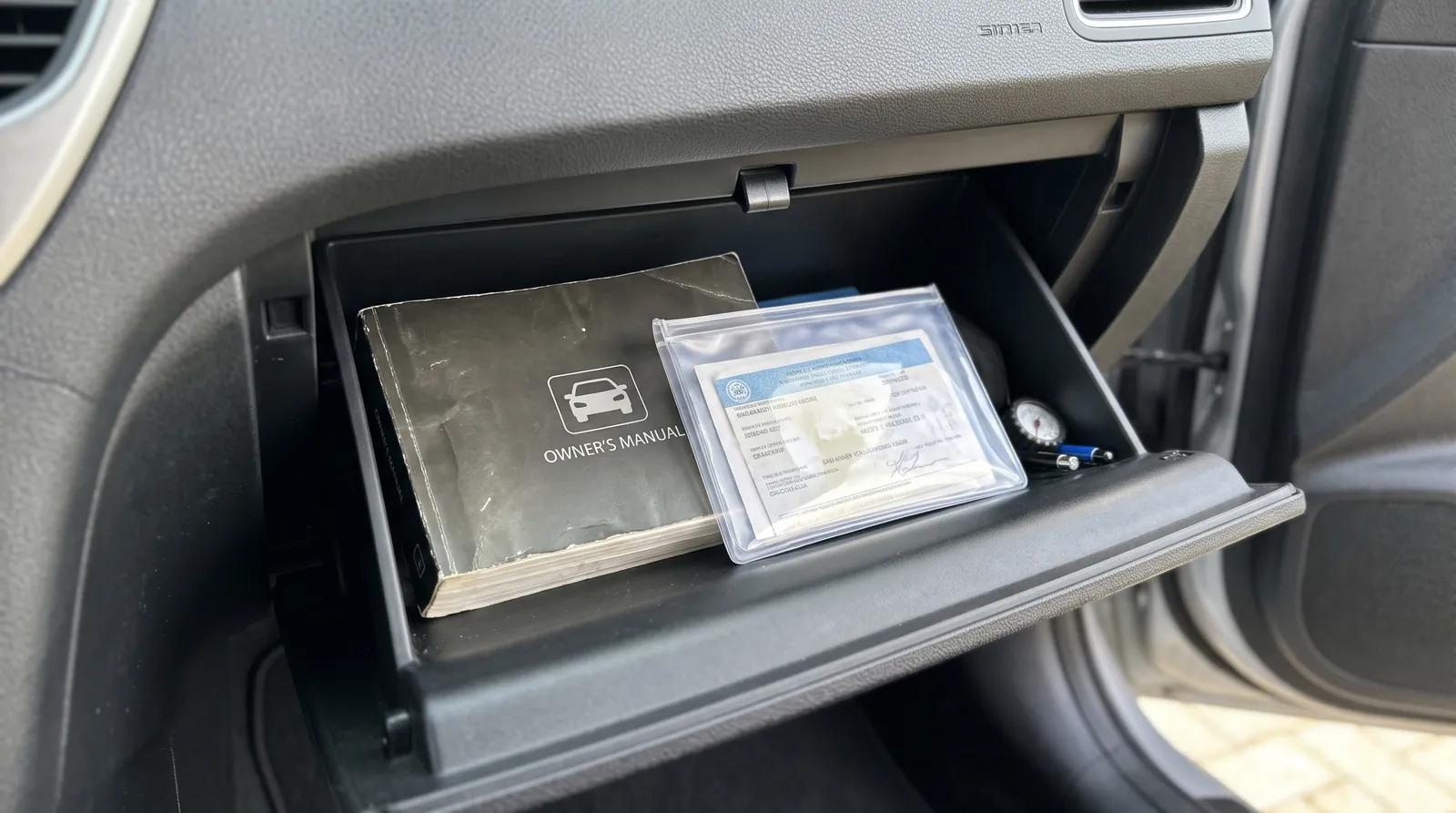
Keep the registration in the car, or on your phone where your state allows it, because officers can ask for it and many states require it. Keep the title at home in a safe place, never in the car. A thief with your car and its title has what they need to sell it.
Is it required to keep your registration in the car?
In most states, yes, either in the vehicle or with the driver. The reason is simple: when an officer stops a car, the registration proves the car is legally on the road and that the plate belongs to it. Without it, you may get a ticket even if the registration is perfectly valid, though many states dismiss it if you show proof later.
The wording differs from state to state:
| State | What the law says |
|---|---|
| California | The owner keeps the registration card or a facsimile copy with the vehicle, except when it's removed to renew or transfer the registration, or when the vehicle is left unattended |
| Florida | The registration certificate or an official copy must be carried in the vehicle, along with rental or lease papers for rented cars |
| Michigan | The certificate is carried in the vehicle or electronically accessible to the driver, and a digital photo of a valid certificate counts |
California's exception for an unattended vehicle is worth noticing. It means you're allowed to take the card with you when you park, which some people do for privacy, as long as it's back in the car when you drive.
Can you keep it on your phone?
In some states. Michigan changed its law in 2017 so that drivers can show an electronic copy of their registration, and an officer viewing it can look only at the registration, not anything else on the phone. Florida, by contrast, still refers to a certificate or official copy carried in the vehicle; an effort to add registration cards to its electronic display rules didn't pass in 2022. North Carolina moved to fully digital registrations in October 2026, with no printed card at all.
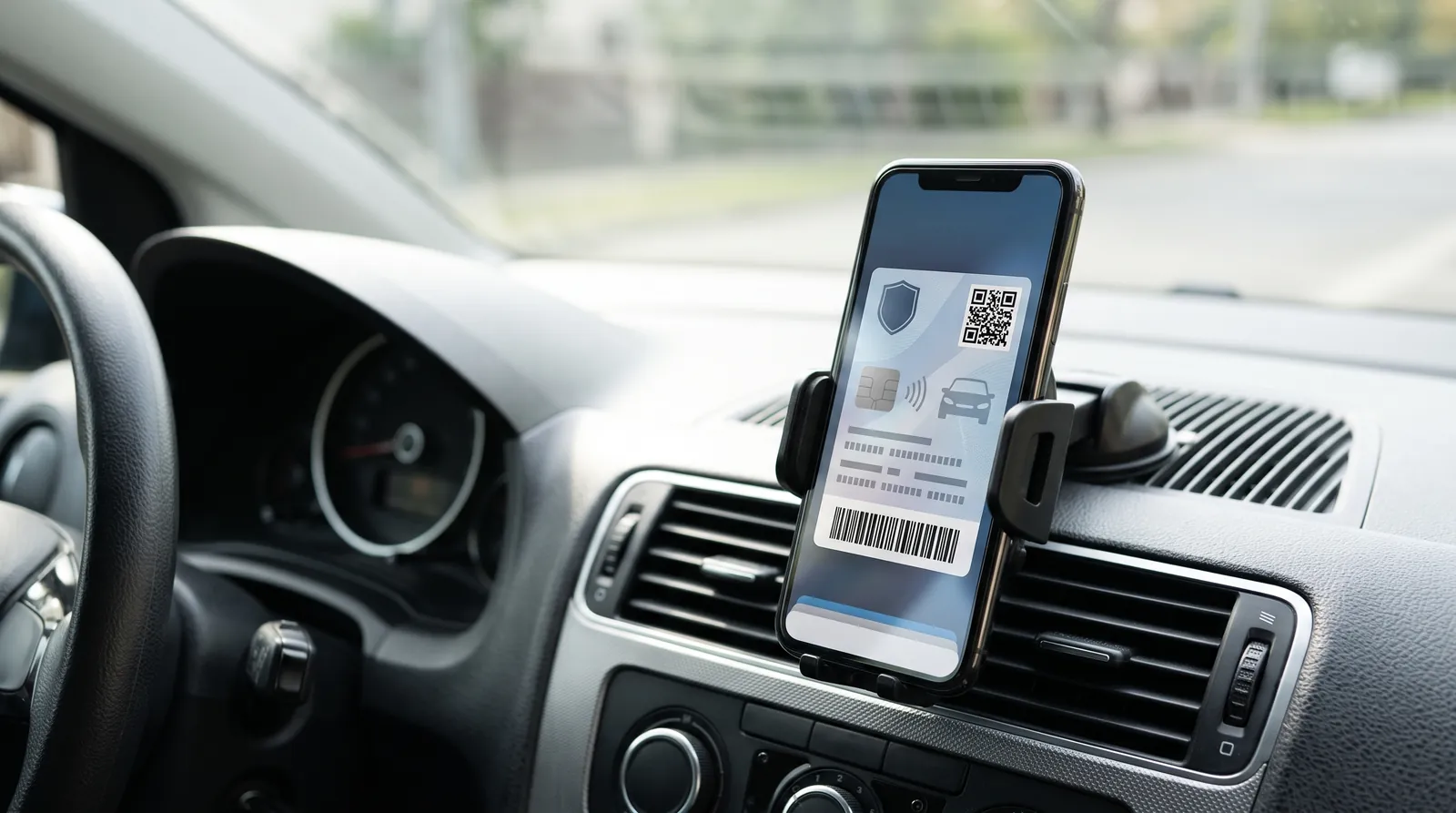
Even where digital proof is allowed, a paper copy in the glove box is a good backup. Phones die, screens crack, and not every officer or rental counter handles digital proof smoothly. Our guide to the vehicle registration card explains what's on it and how to get a replacement, and our guide to the driving record covers the other record officers check at a stop.
Should you keep your title in your car?
No. This is the one piece of advice almost every agency agrees on. New York's DMV puts it plainly: keep your title certificate in a safe place, and don't keep it in the car or carry it with you. Police theft-prevention guides say the same.
The reason is fraud. The title is the document that proves ownership and lets someone sell the car. If a thief steals a car with the title in the glove box, they can forge a signature on the title and sell the car to an unsuspecting buyer, or use it to get a duplicate. Without the title, the stolen car is much harder to sell.
Should I keep my title in my car while I'm selling it, so it's handy when a buyer shows up? Still no. Bring it with you on the day you meet the buyer, and take it home again if the deal falls through.
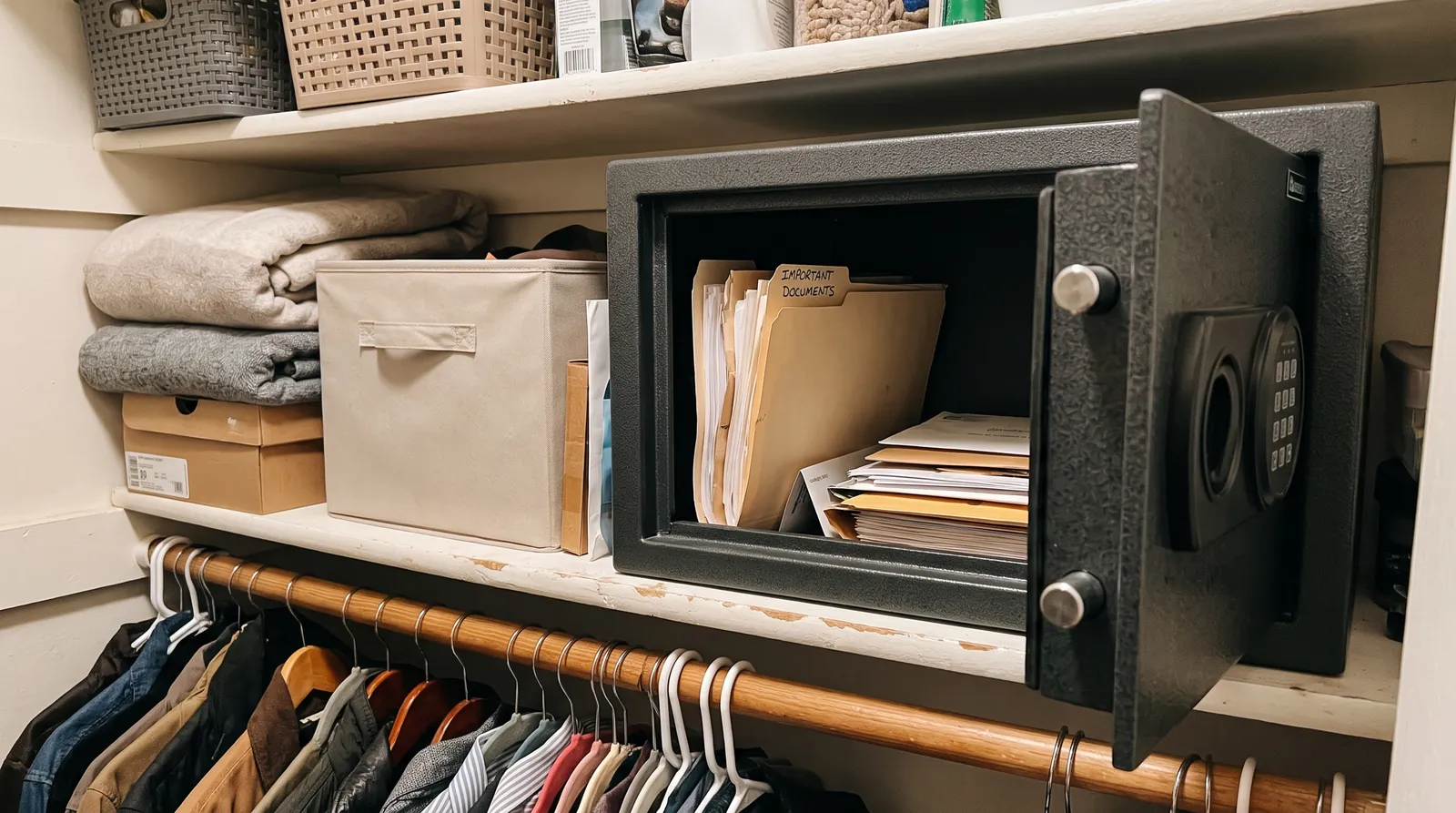
Where should I keep my car title?
- A fireproof box or safe at home, with birth certificates, passports and other papers that are hard to replace.
- A safe deposit box, if you have one, though remember it's only open during bank hours.
- A labeled file in a home filing cabinet, at minimum, away from the car.
Take a photo or copy of both sides and store it separately, such as in a secure cloud folder. If the title is ever lost, having the title number, VIN and issue date makes the duplicate application faster. Our guide on finding your car title number explains why those details help, and the lost title guide covers replacements.
If you have a loan, the lender may hold the title, or it may be electronic. In that case there's nothing to store until the loan is paid off.
The privacy trade-off of keeping registration in the car
The registration card usually shows your name and address. If someone breaks into your car, they learn where you live, and if your garage door opener is in the car too, that's a real risk. A few ways to reduce it:
- Use a mailing address on your registration if your state allows a separate mailing address, such as a PO box.
- Keep the card in a less obvious place than the glove box, like a visor pocket or a holder in the door.
- Take it with you when parked in states that allow it, like California's unattended-vehicle exception.
- Use a digital copy in states that accept one.
- Don't leave a garage remote in the car with your registration.
Using a registration holder for your car
A registration holder for car papers is a small wallet or envelope, often with clear windows, that keeps the registration and insurance card together. It's a cheap way to avoid digging through receipts during a traffic stop. Pick one with clear pockets so you can show the documents without handing over the whole holder, and keep only the papers you need inside. Some come with a visor clip, which keeps them out of the glove box.
If you're stopped, tell the officer where the papers are before you reach for them, especially if they're in the glove box or under a seat.
What to keep in the car, and what to keep at home
| Document | Where |
|---|---|
| Registration card | In the car, or on your phone where allowed |
| Insurance card | In the car, or on your phone; most states accept digital insurance cards |
| Owner's manual | In the car |
| Emergency contacts and medical info | In the car |
| Rental or lease agreement | In the car while you have a rental |
| Title | At home |
| Bill of sale and loan papers | At home |
| Spare key | At home, never hidden on the car |
Rental, borrowed and company cars
When you drive a car that isn't yours, the same rules apply to whoever is behind the wheel. A rental car should have the registration in the glove box or with the rental agreement; check before you leave the lot, and keep the agreement in the car for the whole rental. If you borrow a friend's car, make sure their registration and insurance card are inside. For a company car, ask the fleet manager where the papers are kept, since some fleets keep them in a holder on the visor and others in a binder in the console.
Motorcycles
Motorcycles have nowhere obvious to put papers, but the requirement usually still applies (the title, as with a car, stays at home; see our motorcycle title guide). Riders often fold the registration into a small waterproof pouch under the seat or in a tank bag, or carry it in a wallet. Where your state accepts a digital copy, a photo on your phone is the easiest answer, but keep a paper backup somewhere on the bike in case your phone is dead after a long ride.
If your registration is stolen in a break-in
Replace it, and watch for misuse. A stolen card gives a thief your name, address and plate number, which can help with scams or a cloned plate. Report the break-in to police, request a duplicate registration from your state agency, and check toll and ticket notices for the next few months. If the thief also took a garage remote or house key, change your codes and locks.
If you're stopped without your registration
If you've simply forgotten it, stay calm and tell the officer. Many states let you clear a ticket for not carrying registration by showing a valid registration to the court or police within a set time, sometimes for a small fee. If the registration has actually expired, that's a different problem, and the ticket will usually stand. Our guide on registration renewal links to each state's renewal page so you can catch it before it lapses.
Road trips and border crossings
On a long trip, the registration and insurance card matter more, not less. Officers in another state will want to see them, and a rental counter or repair shop far from home may too. Before you leave, check the registration won't expire while you're away and that the card in the car is the current one. If you're driving into Canada or Mexico, bring the original registration and proof of insurance valid in that country; Mexico, in particular, generally requires Mexican liability insurance, and driving deep into the country can require a temporary import permit. Check the official border agency sites before you go.
Should you keep your registration in your car if it's in storage?
If the car is parked for months, say over winter or while you're away, there's no officer to show it to, so there's little reason to leave the card inside. Many owners take it home with the title for safekeeping and put it back before driving again. If you've filed for non-operation or cancelled the registration while it's stored, keep that paperwork too, so you can show the car was legally off the road if a parking enforcement notice ever arrives.
A new car or a new registration
When you buy a car, keep the temporary registration or dealer paperwork in the car until the permanent registration arrives, along with the bill of sale in case you're asked about the plates or temporary tag. When the new card arrives, swap it in and throw the old one away so you never show an expired card by mistake.
Car papers FAQ
Should you keep your registration in your car?
Yes, in most states. Many require the registration, or a copy, to be in the vehicle or with the driver. California's Vehicle Code requires owners to keep the card or a facsimile with the vehicle, with exceptions such as when the car is left unattended. Michigan accepts an electronic copy or photo.
Should you keep your title in your car?
No. A title in the glove box means a thief who takes the car also gets the document used to sell it. New York's DMV tells owners to keep the title in a safe place and not in the car.
Where should I keep my car title?
Somewhere safe at home, like a fireproof box or file with other important papers, or a safe deposit box. Keep a photo or copy separately so you have the title number and details if it's ever lost.
Can I show my registration on my phone?
In some states. Michigan accepts an electronic copy, including a digital photo of a valid registration. Other states still require paper, so check your state's rules before relying on your phone.
Sources
- California Vehicle Code 4454
- Florida Statutes 320.0605
- Michigan Compiled Laws 257.223
- New York DMV: Certificate of title
This guide is general information, not legal advice. Your state's laws decide what you must carry while driving.